Methodology |
Home > Methodology |
 Primary Principles
The A' Design Award & Competition employs a rigorously meritocratic and scientifically structured evaluation methodology, beginning with a free, anonymous preliminary review in which entrants receive expert feedback and a score (0–10) assessing the competitiveness of their design without any obligation to proceed - this score is confidential. To eliminate presentation bias, all A' Design Award entries must conform to strict presentation guidelines, including standardized image sizes, text formats, and the removal of identifying marks, and are further optimized via an advanced submission enhancement tool that standardizes visual clarity and technical quality. Once submitted, A' Design Award entries are distributed across over many discipline-specific award categories, and evaluated by a grand jury panel composed of verified professionals, scholars, journalists, and business leaders, who undergo identity checks and sign a legally binding Jury Agreement prohibiting bias, collusion, or misuse of confidential materials. Designs are assessed through a blind peer-review process, with jurors never seeing designer or brand names, and reviewed specifically by domain experts in an academic peer-review model, supplemented by focus group insights from industry stakeholders and semi-professionals who contribute votes weighted by category. Voting is conducted using category-specific, research-derived criteria (e.g., functionality, sustainability, emotional impact - published in detail, for each distinct category, at A' Design Award Categories Page), and juror scores are subjected to statistical normalization (Z-scores) to eliminate scorer leniency or severity bias. Additionally, pattern analysis algorithms scan vote distributions to detect anomalies or coordination, disqualifying unethical votes when necessary. The entire system is founded upon a doctoral-level design research framework, continuously refined through survey data and academic feedback to ensure it aligns with evolving best practices. The process is apolitical and independent, disregards designer identity or country of origin, and is supported by a globally diverse jury that ensures cultural equity. Most importantly, the A' Design Award's judging and evaluation as well as organization methodology is fully documented and transparent, with evaluation criteria, jury member lists, and score normalization strategies published openly, creating a replicable, accountable model of ethical, unbiased, and merit-driven design recognition. A' Design Award jurors vote your entries in isolation to reduce groupthink and group biases.
A’ Design Award's Meritocratic Evaluation and Judging Process
A’ Design Award’s judging system is engineered for extreme meritocracy, combining anonymous, criteria-based, statistically-normalized peer review by a large, diverse, and compartmentalized international jury, with rigorous bias-removal and transparency at every stage. A' Design Award implements a scientifically structured, blind, and statistically normalized evaluation system, guided by verified jurors and discipline-specific criteria, to ensure every entry is judged fairly, anonymously, and purely on its intrinsic design merit.
-
A’ Design Award Preliminary Review
- Free, anonymous expert review offering a 0–10 score before nomination.
- Provides detailed feedback on presentation quality, issues, and readiness.
- Helps entrants decide whether to proceed without financial risk.
-
A’ Design Award Presentation Guidelines
- Strict formatting rules: no watermarks, standardized image sizes, and consistent layout.
- Designed to eliminate positive presentation bias and aesthetic distortion.
- Ensures all works are visually normalized before jury review.
-
A’ Design Award's Advanced Submission Optimizer
- Automated tool checks image resolution, contrast, layout quality.
- Promotes visual clarity and consistency across entries.
- Reduces superficial variation in presentation, enhancing merit-based review.
-
A’ Design Award's Grand Award Jury
- Composed of over hundreds ofjurors from academia, design, journalism, and business sectors.
- International, culturally diverse, and discipline-aligned for each category.
- Jurors are assigned categories based on expertise and vote independently.
-
A’ Design Award's Juror Verification & Agreement
- Jurors submit government-issued ID and sign a binding ethics agreement.
- Agreement prohibits collusion, favoritism, misuse of data, or derivative works.
- Voting behavior is monitored with pattern analysis and statistical oversight.
-
A’ Design Award's Blind Judging Process
- Entrant designer and brand identities are hidden from jurors.
- Identifying elements are removed or disallowed.
- Prevents bias based on fame, nationality, or institutional affiliation.
-
A’ Design Award's Academic Peer Review
- Experts in the same design discipline review each entry.
- Ensures evaluations are aligned with field-specific standards.
- Encourages rigor, depth, and design theory in decision-making.
-
A’ Design Award's Focus Group Review
- Includes industry leaders, entrepreneurs, and semi-professionals.
- Adds user-centric and market relevance to voting.
- Votes are weighted based on relevance to category.
-
A’ Design Award's Criteria-Based Voting
- Each category has specific, research-derived scoring criteria.
- Jurors vote per criterion or provide an overall score.
- Criteria are weighted and revised yearly via surveys.
-
A’ Design Award's Score Normalization
- Juror scores are normalized using statistical methods (e.g., Z-scores).
- Corrects for strict vs. lenient scoring behavior.
- Creates comparability and fairness across diverse voting styles.
-
A’ Design Award's Voting Pattern Analysis
- Algorithms monitor for vote manipulation or cohort behavior.
- Irregularities result in vote exclusion or juror disqualification.
- Reinforces integrity of final outcomes.
- A’ Design Award's
Scientific Design
- System built via doctoral-level research and benchmarking of 100+ award programs.
- Synthesizes best practices into a cohesive, optimized evaluation structure.
- Continuously updated based on juror data and community feedback.
-
A’ Design Award's Apolitical Review
- Judging excludes political, racial, or ideological influence.
- A' Design Award prevents unfair treatment based on background, nation, or affiliation.
- Focus is strictly on design quality and impact.
-
A’ Design Award's Inclusive & International Jury
- Open to all countries, sectors, and experience levels.
- A' Design Award Jury includes global representation across cultures and disciplines.
- Reduces regional favoritism and cultural insularity.
-
A’ Design Award's Transparency
- Jury lists, evaluation criteria, scoring methods, and A' Design Award level thresholds are public.
- Risks, rules, and metrics are clearly documented.
- Supports accountability, reproducibility, and trust.
-
No Further Fees (Professional, Digital and Vision Edition Entry)
- Winners in Professional and Digital Editions receive their full prize package without contractually obligated winner fee charges.
- Professional Edition winner kits are distributed free of charge at our Gala Night for attending Professional Edition winners (includes trophy, yearbook, merchandise).
- A' Design Award eliminates financial conflict of interest from the judging process, ensuring recognition is earned, not bought.
-
Equal Opportunity
- A' Design Award 's tiered entry fees support affordability: students and individuals pay less, large companies pay more, creating equity.
- More than 30 free entry pathways are available, including scholarships, ambassador programs, and underrepresented region support.
- A' Design Award enables diversity and access to fair judging regardless of financial capacity.
-
Retention of Design Rights
- Entrants retain full copyright and intellectual property ownership of their submitted work.
- A' Design Award only requests promotional usage rights if a work wins.
- Protects creators from coercive or exploitative IP clauses.
-
Licensing and Declaration
- A' Design Award Entrants must confirm they have rights to promote the work and declare originality of their submission.
- Designs without licenses are judged equally in a “concealed category,” ensuring fair treatment while protecting IP concerns.
- Ensures that all published A' Design Award winners are legally promotable and ethically vetted.
-
Grand A' Design Prize
- Eligible Professional Edition A' Design Award winners receive a robust prize package including 3D-printed trophy, yearbook, exhibitions, press kits, and media coverage.
- The average winning entry gains over 138 media appearances through A' Design Award’s syndication network.
- A' Design Award's global promotion structure reinforces the meritocratic recognition by amplifying real, earned success.
Primary Principles
A' Design Award & Competition is one of the world’s first design award and competitions that has been actively and synthetically developed in order to create value for designers, artists, architects and companies who take part in the event. A' Design Award and Competition promises prestige, fame and recognition to the winners of the A' Design Accolade and to achieve its goals engages in a variety of public relations, marketing, advertising, dissemination and promotion services for awarded works. The ultimate aim of A' Design Award is to create a global appreciation and understanding of good design. A' Design Award does not have financial incentives to award more winners, there is no price vs prize confusion, especially via our Professional, Digital and Vision Entry methods; design recognition programs who charge tens of thousands of euros of Winner’s Fees have a financial incentive to select as many entities as possible as each selection brings a lot of money, and we do not do that, therefore we promote Professional and Digital entry first of all, and we explicitly remind laureates to not join the Classic Edition which introduces such further fees (we had introduced this option as we had recognized many designers were simply checking entry fees for comparison and by introducing the Classic Edition as an entry method, we were able to also explain the concept to entrants. In addition, we have another entry method "Vision Edition" which also does not impose any contractual winner fees. A’ Design Award winners are fair and square winners, who obtained their achievement purely with talent. Entries to the A' Design Award & Competition are judged by blind peer-review process by a very large expert jury panel to ensure fair, merit based and apolitical voting. We do not understand how other awards fairly judge entries if they do not vote on them following anonymous judging process, where the jurors know whose entries being voted on. In A' Design Award, voting is anonymous, jurors vote not for your name but your design; this ensures a fair voting process where good designs truly prevails.
Prestige : Studies and surveys on the subject of “what makes a design award prestigious”, results in a common answer; if a design competition is judged fairly, if an award is independent, and if the accolades are famous, then receiving the design award trophy is considered prestigious. Therefore, a good design award shall be fair, and to ensure that the competition is fair, financial independence is of importance together with award jury and methodology. A' Design Award and Competition does not permit its’ sponsors to take part in the competition, furthermore the accolades does not receive any funding from government in form of subsidies; A' Design Award is financially self-sufficient and self-sustaining and is financed by the participants through the nomination fees.
Respect : A’ Design Award & Competition, is very meritocratic. You may be surprised to know that there are many design recognition programs that charge contractually obliged winner fees from their laureates; when you are selected for these other design recognition programs, you have to pay; such programs have financial incentives to announce as many selected entries as they could. Different from such design recognition programs, A’ Design Award does not have contractually obliged winner fees, and thus A’ Design Award does not have such financial incentives to award as many entries as they could, this is yet another reason why A’ Design Award is highly prestigious and respected within the design world, because A’ Design Award winners are truly winners. There are "no further fees": A' Design Award laureates and winners are not under contractual obligations to pay further fees to obtain the A' Design Prize and/or to make use of their award-winning status. Every year, A' Design Award foregoes up to tens of millions of euro’s of potential extra profits that would otherwise be taken from designers by having a “no further fees policy” (applies to Professional and Digital Edition entrants) that respects and supports designers, architects and creative agencies.
A' Design Award features a grand jury panel composed of academics, press members, fellow designers and industry experts from worldwide who have mastered their own design disciplines and who have all agreed to follow the A' Design Award & Competitions’ Jury Code of Conduct. The Award Jury is renewed with new names each year to add fresh perspectives and to ensure that conflict of interest does not arise.
More importantly, A' Design Award and Competition features a design award methodology, which has been developed (and continuously under development) after analysis of over thousands of design awards and competitions. For example, unlike other design awards or competitions, for the first time, “Preliminary Scores” and feedbacks are provided to help designers or companies who are considering to take part in the competition, free of charge.
The A' Design Award & Competitions’ judging process takes several weeks since each and every entry is carefully considered. But more importantly, before entries are allowed to the competition, their presentations are checked dozens of times, and the jury casts their vote in an independent manner without having the chance to influence each other.
Fame and Recognition : A' Design Award and Competition understands the need of participants to reach design oriented audiences of press and buyers, and for this single purpose significant portion of the A' Design Award & Competitions’ budget is devoted to advertising and promoting award winners, through PR Campaigns, press releases, logo licensing, and sponsored articles, editorial placements and media pitching.
Value : A' Design Award winners are provided Prestige, Fame and Recognition, but also the award winners’ package which includes the award trophy, the printed yearbook, the exhibition service, and many more others also including the translation of award winning works to multiple languages to reach global design media and journalists.
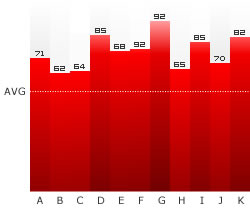 We invite all prospective, past and future participants to discover the A' Design Award Methodology, each link is clickable and you can learn more:
Voting System
What is the voting / scoring weights for individual categories. How do we score the designs?
Evaluation Criteria
How the designs are evaluated; some of our insights about how we pick the best design.
Presentation Bias Reduction
How do we remove or reduce the "Positive Presentation Bias"? Learn about the tools and systems incorporated.
Scoring Interface
How does the jury members score individual designs, the interface for voting.
Competition Brief
Learn about the A' Design Award & Competitions' creative brief.
Standard Score
How do we standardise the scores, how do we normalize votes by different jury members?
Jury Selection
How do we pick the jury members for the competitions? Who is eligible for becoming a jury member?
Jury List
The list of jury members, their titles and affiliations are listed in this page.
Voting Fraud Prevention
Learn methods, strategies and processes used by the A' Design Awards to fight voting fraud.
Announcing Results
How do we announce the results? When do we announce the results? Where do we announce the results?
Award Levels
What are the different levels of success in the A' Design Awards and Competitions, how are they chosen?
Effects on Design Rankings
Learn how winning the A' Design Award & Competition effects "Designer Rankings" and "World Design Rankings"
Score Sheet
Learn more about the score sheet that is given to all participants, see an example score sheet.
Preliminary Checking
What is a preliminary checking, how is it performed, what are the possible results and states?
Professional Preliminary Judging and Evaluation
What is a preliminary evaluation, how is it performed, what are the possible results, insights and states?
Pre-Selection Committee
Learn about the role and functions of the A' Design Award & Competitions' Pre-Selection Committee.
Submission Optimization
What is submission optimization and analysis? Improve the presentation quality of your submission.
Deadline Extension
Learn about potential deadline expansions or postponing of the date of entries to the awards.
Last and Omega Entry
Learn about the Last and Omega Entry periods available after the deadline extension.
Competition Timeline
What is the general detailed time line of the A' Design Award & Competition?
Publishing and Privacy Settings
What are the possible privacy and publishing settings for nominated designs?
Advisory Panel
Learn about the role and functions of the A' Design Award & Competitions' Advisory Board.
Judging and Dissemination Settings
What are the possible options for public announcement, judging date and dissemination for nominated entries?
Call for Jury Members
A' Design Award is actively seeking jury members for academic, professional, enterprise and focus-group panels.
Design Award Jury Agreement
A' Design Award & Competition requires jury members to ethically and fairly judge entries.
Transparency Policy
Learn about any potential issues that you would consider to be important for disclosure.
Policy on Further Fees
Please read more about what we think about the "Further Fee or Winners' Fee" issues.
Risks of Joining Design Contests
Learn about any potential risks that you are subject to when taking part in design contests.
Ongoing Research
Learn more about open research topics and questions on evaluation of entries and competitions.
Award & Logo Usage Guidelines
Learn how to use the A' Design Award Logo and how to announce the award status.
Hints & Tips
Here are a few hints and tips to help you succeed at A' Design Awards.
Eligibility
Learn more about the design award eligibility conditions and its exception.
Theory
Learn more about design competitions, what are they, history, organizational requirements etc.
Model Release Agreement
This is a simple model release agreement provided by A' Design Award without any warranties.
Dispute Resolution
Learn more about dispute resolution, how to report a design, a situation or make a claim against a design entry.
Copyright Infringement
Learn more about what to do when someone uses your award winning design without permission.
Shipment Policy
Learn more about our shipment policy, terms and the shipment claim possibilities.
Profile Score
Learn more about profile scoring and ranking mechanism.
Badge System
Learn more about our badge system and see a list of all badges that could be earned.
Bug Bounty Program
Learn more about our bug bounty program and security policy.
Account Types
Learn more about account types designed for different design award participant profiles.
Entry Types
Learn more about different entry nomination types that could be used when joining the A' Design Awards.
Universal Design Principle
Learn why A' Design Award and Competition is one of the World's most international design accolades.
Politeness Policy
Learn about our values when communicating with participants or each other.
Audience Engagement Policy
Learn about our values when communicating and engaging with audience requests and issues.
Advancement Policy
Learn about our values and goals for advancing the A' Design Awards.
Media Relations Policy
Learn about our press efforts, media databases and communication channels for A' Design Awards.
Public Relations Policy
Learn about how we approach to public relations and publicity at A' Design Awards.
Second-Chance Policy
Learn about how we approach to issues regarding Preliminary Score inconsistencies at A' Design Awards.
Gifts Policy
Ensuring that the awards' meritocratic nature remains unblemished, we do not accept gifts or favors.
Ombudsman
Get in touch with the A' Design Award ombudsman to have your concerns investigated.
Leadership Principles
What are the properties we seek in our leaders and our staff?
Designful Company Designation
Learn about the Designful Company Designation initiative and its role for good design.
Networking Effects
Learn Why A' Design Award has a wide range of categories, importance of concepts and exploration.
Intellectual Property Guidelines
Learn A' Design Award's intellectual property rights and guideline suggestions for participants.
License and Declaration Process
Learn how we maintain a high level of integrity, fairness and meritocracy with License and Declaration process.
Competitive Responses
Learn how to react and reply when your competitors try to diminish your prestigious award recognition.
Differentiation Intensity Mapping
Learn how to use A' Design Award Marketing Collaterals based on competitive density in your specific market context.
Benefit Articulation Matrices
Learn how to use leverage A' Design Award based on your award criteria, award level and market.
Heritage-Building Timeline
Access a clear, phased strategy for communicating, embedding, and institutionalizing your design excellence.
Portfolio Enhancement Guidelines
Access structured recommendations for strategically integrating design award recognition into professional showcases.
Narrative Amplification Techniques
Use strategic storytelling methodologies that transform design excellence recognition into commercial advantage.
Multi-Audience Story Adaptation Frameworks
Create tailored messaging, ensuring narrative alignment and stakeholder impact for strategic messaging.
Message Hierarchy Documentation
Incorporate A' Design Award into broader brand communications without overshadowing brand elements.
Visual Storytelling Guidelines
Enhance your A' Design Award value through strategic visual storytelling techniques for higher market impact.
Juror's Declaration and Judging Ethics
Learn more on A' Design Award's jury declaration and judging ethics.
The A' Design Award embodies a philosophy that values the intersection of good design, education, and empathy to foster positive change in the world. Our vision is a global network of creative thinkers, designers, and organizations committed to nurturing a deeper understanding and appreciation for good design principles, inspiring intellectual development, and encouraging empathy and respect across diverse cultures and viewpoints. To bring this vision to life, our mission is to organize world-class design awards and competitions, develop educational programs, conduct workshops, and partner with reputable institutions that facilitate the exchange of ideas and foster innovation. A' Design Awards strive to empower individuals to express their creativity and identity, while cultivating a culture that champions diversity, inclusivity, and environmental stewardship. Through its commitment to good design, the A' Design Award aspires to build a world where people can flourish in harmony with one another and the environment.

 |
 |