
Urban Prism House by Nobuaki Miyashita |
Home > Winners > #171578 |
 |
|
||||
| DESIGN DETAILS | |||||
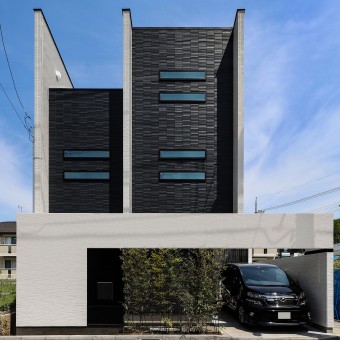
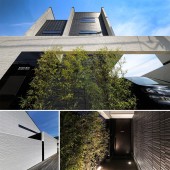
| DESIGN NAME: Urban Prism PRIMARY FUNCTION: House INSPIRATION: The project transforms zoning constraints into design potential, integrating privacy, natural light, and spatial expansion. The home’s multi-layered structure fosters an interplay between openness and enclosure, adapting flexibly to its surroundings. Carefully arranged volumes and walls create a dynamic sequence of spaces. The design embraces traditional Japanese elements, reinterpreted through contemporary architectural language to enhance urban living. UNIQUE PROPERTIES / PROJECT DESCRIPTION: Urban Prism balances privacy and openness in a dense urban setting. The design utilizes boundary walls and a gate to create a buffer zone filled with light and air, seamlessly connecting the interior and exterior. Japan’s strict height and setback regulations shaped its refined, sculptural form. A courtyard extends the living space, while adjustable screens regulate privacy and daylight. Black bamboo and upward lighting enhance the entrance, evoking a Japanese aesthetic. OPERATION / FLOW / INTERACTION: Smooth circulation and spatial layering create a dynamic living experience. The atrium channels natural light and air throughout the house, shifting in ambiance with time. Adjustable screens and staggered walls allow residents to control privacy and exposure. The courtyard functions as an outdoor extension of the living room, enhancing spatial fluidity. Black bamboo and illuminated surfaces establish a serene entryway, linking nature with contemporary design. PROJECT DURATION AND LOCATION: The project was completed in 2019 in Tachikawa, Tokyo, Japan. FITS BEST INTO CATEGORY: Architecture, Building and Structure Design |
PRODUCTION / REALIZATION TECHNOLOGY: The house employs durable materials suited to urban environments. Textured fiber cement siding accentuates light and shadow interplay, reinforcing depth. The interior harmonizes solid wood, steel, and glass, blending modernity with warmth. Oak flooring enhances the tactile experience. High-performance insulated glass and movable screens optimize daylight, ventilation, and privacy. The exterior cladding ensures longevity, requiring minimal maintenance over time. SPECIFICATIONS / TECHNICAL PROPERTIES: Site Area: 100.13 Square meters Building Area: 57.64 Square meters Total Floor Area: 127.82 Square meters Structure: Wood Number of Floors: 3 above ground Eaves Height: 8.53 m Ceiling Height: 2.50 m TAGS: architecture, house, urban design, natural light, spatial composition, sustainable living RESEARCH ABSTRACT: Type of Research: Architectural design research Research Objectives: Optimization of urban housing through spatial and environmental adaptability Methodology: Model testing, daylight and airflow simulations Data Collection: On-site analysis, material performance tests Results: Established a refined approach to urban privacy, integrating zoning constraints into design solutions CHALLENGE: The greatest challenge was balancing privacy and openness within strict urban zoning constraints. Japan’s stringent height and setback regulations required innovative volumetric manipulation to maximize livable space. Socially, the project had to address urban density while maintaining tranquility. Externally, material selection was limited by durability and maintenance concerns. Advanced simulations optimized daylight and airflow, ensuring a harmonious spatial experience. ADDED DATE: 2025-03-07 06:57:56 TEAM MEMBERS (1) : N/A IMAGE CREDITS: Image #1, #2,#3, #4, #5: Photographer Nobuaki Miyashita, Variations, 2019 |
||||
| Visit the following page to learn more: https://www.mrstudio.biz | |||||



| CLIENT/STUDIO/BRAND DETAILS | |
 |
NAME: Aida Sekkei Co., Ltd. PROFILE: Aida Sekkei is a homebuilder that was established in 1981 in Saitama Prefecture, Japan. The company adopts the traditional Japanese wooden post-and-beam construction method and offers fully customized homes. It supplies approximately 3,000 homes annually. With over 1,100 employees, it was listed on the Tokyo Stock Exchange in 2021. Aida Design operates its own precut factory and leverages a separate ordering system and scale advantages to drastically reduce construction costs, thereby providing low-cost housing |

| AWARD DETAILS | |
 |
Urban Prism House by Nobuaki Miyashita is Winner in Architecture, Building and Structure Design Category, 2024 - 2025.· Read the interview with designer Nobuaki Miyashita for design Urban Prism here.· Press Members: Login or Register to request an exclusive interview with Nobuaki Miyashita. · Click here to register inorder to view the profile and other works by Nobuaki Miyashita. |
| SOCIAL |
| + Add to Likes / Favorites | Send to My Email | Comment | Testimonials | View Press-Release | Press Kit |
Did you like Nobuaki Miyashita's Architecture Design?
You will most likely enjoy other award winning architecture design as well.
Click here to view more Award Winning Architecture Design.
  |
 |