
Yamaha Corporation Headquarters Head Office by Obayashi Corporation |
Home > Winners > #170181 |
 |
|
||||
| DESIGN DETAILS | |||||
| DESIGN NAME: Yamaha Corporation Headquarters PRIMARY FUNCTION: Head Office INSPIRATION: As the culmination of a reorganization plan that has been underway since 2007, this project relocated the aging functions of the existing Yamaha head office to the east wing in the center of the facility and consolidated them into a compact office located in the city center, while strengthening collaboration with other buildings. The client expressed a variety of requests for the project, including brand image expression, high environmental performance, and a highly efficient workplace. UNIQUE PROPERTIES / PROJECT DESCRIPTION: This building, located in Hamamatsu City, Shizuoka Prefecture, Japan serves as the global headquarters of Yamaha Corporation, a renowned manufacturer of world-class musical instruments. The main feature of this building is the connection with the existing building through a large overhanging volume at the lower level that allows for smooth traffic. This network-form design not only enhances employee interaction but also promotes brand communication and organizational synergy. OPERATION / FLOW / INTERACTION: The office planning was based on the ABW concept of encouraging employees, the end-users, to work autonomously. The goal was to create a workplace that is worth coming to work in by providing a variety of seats and locations and a highly functional environment to enhance engagement. In addition, advanced technologies such as the Yamaha Web Conference System were adopted to enable smooth transmission and collaboration from the head office to all domestic and overseas offices and plants. PROJECT DURATION AND LOCATION: Location: Hamamatsu City, Shizuoka, Japan Construction period: October 2022 - June 2024 FITS BEST INTO CATEGORY: Architecture, Building and Structure Design |
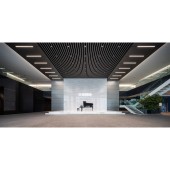
PRODUCTION / REALIZATION TECHNOLOGY: The building showcases a symmetrical double-skin curtain wall on a stable podium, symbolizing its head office role while reflecting the sky and emphasizing verticality. The lower section features a dynamic pilotis space and a two-story atrium, with an upper terrace that includes a wood deck and plantings for enhanced connectivity. Inside, Yamaha's philosophy is evident through a monochrome color scheme, varied materials, diverse ceiling shapes and biophilic design. SPECIFICATIONS / TECHNICAL PROPERTIES: Location: Hamamatsu City, Shizuoka, Japan Use: Office (Headquarters) Construction period: October 2022 - June 2024 Site area: 43,448.51m2 Building area: 2,833.26m2 Total floor area Number of floors: 12 floors above ground tower building 1st floor Maximum Height: 59.023m Structure: Steel construction, Seismic Isolation TAGS: Architecture, office, headquarters, Yamaha, Obayashi Corporation, seismic isolation, ZEB, natural ventilation, piano, Japan RESEARCH ABSTRACT: In the new normal office design of the after-corona era on the standard floor, ventilation windows were installed to ensure natural ventilation in case of emergency. To verify the effectiveness of this ventilation window in the interim period and the effect of improving the office temperature and humidity environment, a fluid analysis was conducted for the prevailing winds on the site. Through this approach, we aim to create an office space that is both comfortable and safe. In addition, in order to minimize the negative impact of the building on the neighboring environment after its construction, we conducted a shading simulation and a wind environment simulation. Based on this analysis, we developed the shape and layout of the building as well as a planting plan. Through this process, we aim to harmonize the building with the surrounding environment and create a sustainable architectural design that takes the community into consideration. CHALLENGE: This describes structural planning solutions. A base isolation structure ensures business continuity. The steel-framed superstructure has earthquake-resistant columns for openness and rigidity. Cantilever beams support the core-side span, while independent columns with low-friction bearings hold third-floor overhangs. Large beams manage stresses, and the SRC foundation allows smooth stress transmission. Column heads are placed within the eaves for better continuity at the entrance. ADDED DATE: 2025-02-26 21:08:55 TEAM MEMBERS (6) : Hiroshi Satake, Kenji Matsuoka, Rei Sato, Hirofumi Ueda, Kazuhiro Yasufuku and Yuya Kimura IMAGE CREDITS: Image #No1-5: Photographer Naomichi Sode (SS Co., Ltd) |
||||
| Visit the following page to learn more: https://www.yamaha.com/ja/news_release/2 |
|||||



| CLIENT/STUDIO/BRAND DETAILS | |
 |
NAME: Yamaha Corporation PROFILE: Yamaha Corporation, headquartered in Hamamatsu City, Shizuoka, Japan, is a global company operating in three areas: musical instruments, audio equipment, and components/equipment/others. |

| AWARD DETAILS | |
 |
Yamaha Corporation Headquarters Head Office by Obayashi Corporation is Winner in Architecture, Building and Structure Design Category, 2024 - 2025.· Read the interview with designer Obayashi Corporation for design Yamaha Corporation Headquarters here.· Press Members: Login or Register to request an exclusive interview with Obayashi Corporation. · Click here to register inorder to view the profile and other works by Obayashi Corporation. |
| SOCIAL |
| + Add to Likes / Favorites | Send to My Email | Comment | Testimonials | View Press-Release | Press Kit |
Did you like Obayashi Corporation's Architecture Design?
You will most likely enjoy other award winning architecture design as well.
Click here to view more Award Winning Architecture Design.
  |
 |