
Plastic Heart LED Media Art by SuKang You |
Home > |
 |
|
||||
| DESIGN DETAILS | |||||
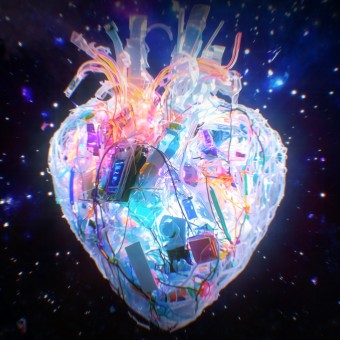
| DESIGN NAME: Plastic Heart PRIMARY FUNCTION: LED Media Art INSPIRATION: Plastic Heart was inspired by the impact of plastic pollution on ecosystems. The plastic we use daily threatens all living beings, from wildlife to marine life, and even the Earth itself. Yet, the vibrant plastic debris—reminiscent of Christmas ornaments—creates an ironic contrast, making waste visually striking. The heart is ambiguous—it could belong to a human, an animal, or the planet—urging audiences to reflect on sustainability and collective responsibility. UNIQUE PROPERTIES / PROJECT DESCRIPTION: Plastic Heart is a Public LED Media Art installation that visualizes the environmental crisis caused by plastic waste. The artwork takes the form of a heart, constructed from colorful plastic debris, pulsating rhythmically like a living organ. Utilizing AI-generated imagery and NeRF technology, the piece transforms digital artwork into a striking 3D visualization. The LED display enhances its immersive quality, engaging the audience with a thought-provoking spectacle. OPERATION / FLOW / INTERACTION: Plastic Heart is a video-based public LED media installation that serves as a visual warning about the environmental impact of reckless plastic consumption. The heart, made of vibrant plastic debris, symbolizes an unidentified life form, blurring the lines between human, animal, and planet. Ironically, the video starts with dazzling, festive visuals set to Christmas carols, drawing viewers in with beauty before revealing its underlying environmental message. PROJECT DURATION AND LOCATION: Plastic Heart was produced from September to November 2024. The video was created for SMAF 2025 (Seoul Media Art Festival) and was first exhibited on December 25, 2024, at COEX Mall in Gangnam, Seoul, South Korea. The anamorphic LED screen display measured 4224mm (W) × 1944mm (H) and was adapted for 14 different screen formats to ensure broad accessibility across various public display environments. |
PRODUCTION / REALIZATION TECHNOLOGY: Plastic Heart was created using generative AI to generate 3D visualizations, which were then refined through digital compositing. This public LED media installation is a video-based artwork designed for large-scale display. NeRF technology was used to generate multi-angle 3D objects based on the desired design, enhancing spatial realism. The final visuals were processed with post-production tools such as After Effects for a seamless and immersive motion effect. SPECIFICATIONS / TECHNICAL PROPERTIES: Plastic Heart is a public LED media installation designed for public spaces. The project was exhibited at COEX Mall in Gangnam, Seoul, South Korea, displayed on a 4224mm (W) × 1944mm (H) anamorphic LED screen. It was adapted for 14 different screen formats, ensuring compatibility across diverse public display environments. The video was created with high-resolution techniques to maintain visual clarity on large-scale digital displays. TAGS: Plastic Heart, Public LED Media Art, Environmental Awareness, Generative AI, NeRF Technology, Digital Art, Motion Graphics, Sustainable Design, Plastic Pollution, Visual Storytelling RESEARCH ABSTRACT: Plastic Heart serves as a visual statement on the environmental crisis caused by plastic waste. By transforming discarded plastics into a pulsating heart, it highlights the consequences of excessive consumption. The vibrant yet critical imagery draws viewers in, prompting reflection on sustainability. This project contributes to raising public awareness of plastic pollution, encouraging individuals and industries to reconsider their reliance on disposable plastics and take action for a greener future. CHALLENGE: The biggest challenge was utilizing generative AI and NeRF tools to achieve precise artistic control. While generative AI provided visually compelling outputs, refining them to match the intended design required extensive adjustments. NeRF was used to generate multi-angle 3D objects, but optimizing them for animation and integration into the final composition was complex. Overcoming these challenges involved iterative refinement and a hybrid approach combining AI with traditional post-production tools. ADDED DATE: 2025-02-24 12:16:40 TEAM MEMBERS (1) : IMAGE CREDITS: Image: Creator / Video Designer SuKang You (Graduate School of Visual Communication, Hongik University), Plastic Heart, 2024. Video Credits: Creator / Video Designer SuKang You (Graduate School of Visual Communication, Hongik University), Plastic Heart, 2024. |
||||


| CLIENT/STUDIO/BRAND DETAILS | |
 |
NAME: SuKang You (Hongik University) PROFILE: SuKang You is a visual communication designer specializing in motion graphics and digital media. Currently pursuing a graduate degree at Hongik University, SuKang explores the intersection of artificial intelligence, generative design, and environmental themes in visual storytelling. With a background in broadcasting and on-air promotion (OAP), SuKang integrates innovative technologies such as Neural Radiance Fields (NeRF) and generative AI into creative projects. The Plastic Heart project, developed as part of academic research, reflects a deep concern for environmental sustainability, utilizing AI-driven techniques to visualize the impact of plastic waste on ecosystems. |

| SOCIAL |
| + Add to Likes / Favorites | Send to My Email | Comment | Testimonials | View Press-Release | Press Kit |
Did you like Sukang You's Digital Installations Design?
You will most likely enjoy other award winning digital installations design as well.
Click here to view more Award Winning Digital Installations Design.
  |
 |