Sound Of Body Vocal Visualization Device by Runqi Zou |
Home > Winners > #168789 |
 |
|
||||
| DESIGN DETAILS | |||||
| DESIGN NAME: Sound Of Body PRIMARY FUNCTION: Vocal Visualization Device INSPIRATION: The inspiration for this project stemmed from the profound connection between music and human emotions. I wanted to explore how external sounds and internal bodily rhythms could harmonize to create a unique sensory experience. The idea was to transform the often-overlooked sounds of the body—like heartbeats, breathing, and intestinal noises—into an art form, allowing people to appreciate their own biological rhythms as they would a piece of music. The project was also motivated by the therapeutic effects of music on mood and mental health, aiming to deepen the connection between sound, emotion, and self-awareness. UNIQUE PROPERTIES / PROJECT DESCRIPTION: This design, Sound of Body, is an interactive installation that merges external music with the internal rhythms of the human body. Unlike traditional music or sound art, this project uniquely integrates real-time biological signals—such as heart rate and breathing—into a dynamic audio-visual experience. The strength of this design lies in its ability to create a deeply personal and emotional connection between the user and the music, transforming ordinary bodily sounds into a captivating symphony. Its unique feature is the real-time sonification and visualization of physiological data, making the invisible rhythms of the body both audible and visible. OPERATION / FLOW / INTERACTION: Sound of Body is an interactive art installation that lets people "hear" their own body rhythms, like heartbeats and breathing, as part of a live music experience. By standing in front of the installation, sensors detect these rhythms and transform them into real-time sound and visuals. The experience creates a unique connection between body and music, making personal biology into an immersive, artistic performance. PROJECT DURATION AND LOCATION: - FITS BEST INTO CATEGORY: Fine Arts and Art Installation Design |
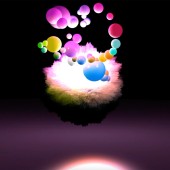
PRODUCTION / REALIZATION TECHNOLOGY: The design was developed through a combination of sensor technology, data processing, and creative sound design. Sensors were used to capture biological signals like heart rate and breathing, which were then processed using Python to generate musical elements such as pitch, tempo, and drumbeats. The audio-visual output was created through sonification and visualization programming, where the data was translated into both sound and visual patterns. The project involved iterative testing to ensure the emotional and physiological responses aligned with the intended experience, blending technology, art, and human biology seamlessly. SPECIFICATIONS / TECHNICAL PROPERTIES: It project leverages advanced sensor technology to capture real-time biological data, including heart rate and breathing patterns. This data is processed using Python, where algorithms translate physiological signals into musical elements such as pitch, tempo, and drumbeats. The sonification process maps heart rate to musical notes and breathing rhythms to tempo variations, creating a dynamic audio experience. Visualization is achieved through custom programming, where the data is represented as pulsating spheres and rotating patterns, synchronized with the audio output. The system integrates a user-friendly interface, allowing participants to interact with their own biological rhythms in real-time, blending technology, art, and human physiology seamlessly. TAGS: - RESEARCH ABSTRACT: This design is based on experimental research exploring the connection between human biology and sound. The goal was to translate internal body rhythms into an interactive music and visual experience. We used biometric sensors to collect heart rate and breathing data, processed through Python algorithms that mapped these signals into musical elements. User testing with diverse participants helped refine the system. Insights revealed that real-time sonification enhanced self-awareness, relaxation, and emotional connection, with potential applications in art, therapy, and meditation. CHALLENGE: The most difficult part was balancing artistic creativity with technological precision. Capturing and transforming biological rhythms into music required overcoming sensor accuracy issues and latency problems. Another challenge was ensuring the experience remained emotionally engaging, rather than feeling clinical. Additionally, integrating visuals that responded fluidly to real-time body changes was complex. The project pushed boundaries in sound art, biofeedback, and interactive technology, requiring deep experimentation and iterative testing. ADDED DATE: 2025-02-18 21:17:55 TEAM MEMBERS (1) : Runqi Zou IMAGE CREDITS: Image #1: Photographer Runqi Zou, 2024. Image #2: Photographer Runqi Zou, 2024. Image #3: Photographer Runqi Zou, 2024. Image #4: Photographer Runqi Zou, 2024. Image #5: Photographer Runqi Zou, 2024. |
||||


| CLIENT/STUDIO/BRAND DETAILS | |
 |
NAME: Runqi Zou PROFILE: This design, Sound of Body, is an interactive installation that merges external music with the internal rhythms of the human body. Unlike traditional music or sound art, this project uniquely integrates real-time biological signals—such as heart rate and breathing—into a dynamic audio-visual experience. |

| AWARD DETAILS | |
 |
Sound of Body Vocal Visualization Device by Runqi Zou is Winner in Fine Arts and Art Installation Design Category, 2024 - 2025.· Read the interview with designer Runqi Zou for design Sound Of Body here.· Press Members: Login or Register to request an exclusive interview with Runqi Zou. · Click here to register inorder to view the profile and other works by Runqi Zou. |
| SOCIAL |
| + Add to Likes / Favorites | Send to My Email | Comment | Testimonials | View Press-Release | Press Kit |
Did you like Runqi Zou's Fine Art Design?
You will most likely enjoy other award winning fine art design as well.
Click here to view more Award Winning Fine Art Design.
  |
 |