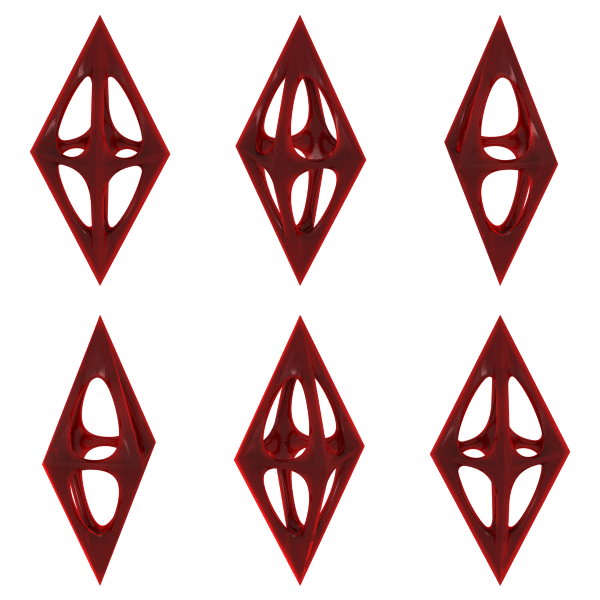
The Vessel Type Water Management by Ruiting Xu |
Home > Winners > #166076 |
 |
|
||||
| DESIGN DETAILS | |||||
| DESIGN NAME: The Vessel Type PRIMARY FUNCTION: Water Management INSPIRATION: The inspiration for this project stemmed from the challenges faced by communities in Madagascar due to seasonal droughts and flooding. I sought to create a design that would provide a sustainable water supply while fostering social equity. The idea evolved from a combination of local environmental conditions and the need for infrastructure that also serves as a communal and cultural space. Research focused on water management techniques and eco-centric design principles. UNIQUE PROPERTIES / PROJECT DESCRIPTION: The Vessel Type is an architectural solution that addresses the pressing environmental and social challenges faced by rural communities in Madagascar. Designed to respond to the region's vulnerability to seasonal droughts and flooding, this project combines innovative water management infrastructure with spaces for social and cultural engagement. It highlights the transformative role of architecture in fostering resilience, social equity, and sustainable development. OPERATION / FLOW / INTERACTION: The Vessel Type is a structure that adapts to the changing seasons. In the wet season, it captures and filters rainwater, helping to prevent flooding while providing a safe path for the community. During the dry season, it becomes a water storage area, distributing water to people and supporting agriculture. The structure also transforms into a lively community space for events, bringing people together and improving their quality of life by providing reliable water and gathering spaces. PROJECT DURATION AND LOCATION: Project Duration: Ongoing Location: Ambalorao, Madagascar FITS BEST INTO CATEGORY: Architecture, Building and Structure Design |
PRODUCTION / REALIZATION TECHNOLOGY: The design process began by studying the climate challenges of the region, particularly water scarcity and seasonal flooding. The project uses concrete and wood. Concrete provides durability and resistance to constant water exposure, promoting enduring stability. Wood adds warmth, flexibility, and a natural aesthetic while integrating seamlessly with the landscape. Its use allows for easy replacement over time as part of the structure's life cycle, supporting the project's sustainability and adaptability. SPECIFICATIONS / TECHNICAL PROPERTIES: The project incorporates a rainwater harvesting system that captures runoff during the wet season, storing it in a central filtration unit. The water is filtered using a rural submerged filter technique with sand and gravel, ensuring clean and potable water. The structure combines concrete for its durability in wet conditions and wood for flexibility and natural integration. The design also features adaptive spaces, with wood components replaceable over time, ensuring sustainability and longevity. TAGS: Sustainable Architecture, Rainwater Collection, Water Management, Environmental Design, Ecological Infrastructure, Social Equity, Drought-resistant Design, Flood Mitigation RESEARCH ABSTRACT: This research explores how architecture can address water scarcity and flooding in Ambalorao. The objective is to design a structure that manages water while enhancing community life. The methodology includes studying local climate patterns, water access issues, and community needs through environmental analysis. The results show that a multi-functional water management system can improve access to clean water and foster social interaction. This approach can enhance villagers' lives, support sustainable agriculture, and inform future climate-adaptive solutions. CHALLENGE: The hardest part of this design was creating a solution that balanced both the water needs and long-term sustainability for Ambalorao. The creative challenge lay in integrating water management with community spaces in a way that was both functional and culturally relevant. Obstacles included the limited availability of local data and understanding the social dynamics of the village. External factors, like access to materials, climate variability, and lack of technological infrastructure, further complicated the development, requiring innovative design solutions. ADDED DATE: 2024-12-13 08:49:32 TEAM MEMBERS (1) : IMAGE CREDITS: Ruiting Xu, 2024. |
||||
| Visit the following page to learn more: https://www.ruitingxu.com/ | |||||




| AWARD DETAILS | |
 |
The Vessel Type Water Management by Ruiting Xu is Winner in Architecture, Building and Structure Design Category, 2024 - 2025.· Read the interview with designer Ruiting Xu for design The Vessel Type here.· Press Members: Login or Register to request an exclusive interview with Ruiting Xu. · Click here to register inorder to view the profile and other works by Ruiting Xu. |
| SOCIAL |
| + Add to Likes / Favorites | Send to My Email | Comment | Testimonials | View Press-Release | Press Kit |
Did you like Ruiting Xu's Architecture Design?
You will most likely enjoy other award winning architecture design as well.
Click here to view more Award Winning Architecture Design.
  |
 |