
Gene Espresso Machine by Felix Ke Chen |
Home > Winners > #165702 |
 |
|
||||
| DESIGN DETAILS | |||||
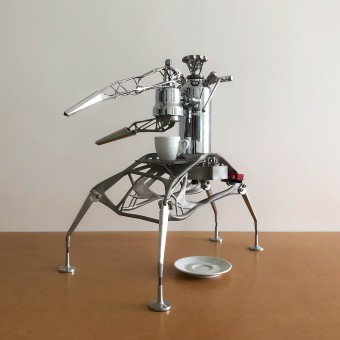
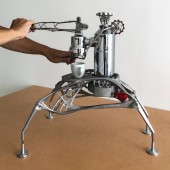
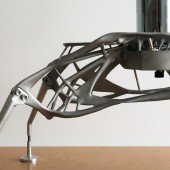
| DESIGN NAME: Gene PRIMARY FUNCTION: Espresso Machine INSPIRATION: My passion for coffee and admiration for the timeless beauty of lever espresso machines inspired the Gene. Lever machines, the earliest espresso technology, use mechanical force to brew, offering a tactile and engaging experience. I envisioned combining this classic interaction with futuristic metal 3d printing and generative design to reimagine their form and function. This approach enhances structural efficiency, introduces organic aesthetics, and elevates user interaction. UNIQUE PROPERTIES / PROJECT DESCRIPTION: Gene blends traditional espresso brewing with modern innovation. Using generative design and metal 3d printing, it improves structural efficiency, optimises material use, and incorporates organic aesthetics inspired by nature, giving the classic lever espresso machine a futuristic identity. Its intuitive lever mechanism and titanium 3d-printed load-bearing structures, paired with cnc-machined contact points, create a design that embodies strength and dynamic motion. OPERATION / FLOW / INTERACTION: Gene operates like a traditional espresso machine but features enhanced usability and performance due to its generative design. The 3d printed components optimise thermal management and structural integrity, improving coffee extraction. Its refined ergonomics ensure intuitive operation, while the seamless integration of advanced manufacturing elevates the interaction, making every use efficient and satisfying. PROJECT DURATION AND LOCATION: The project started in December 2019 in Guangzhou and finished in August 2021 and was exhibited in the show at Guangzhou Academy of Fine Arts, China |
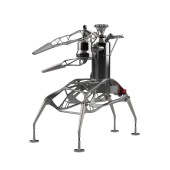
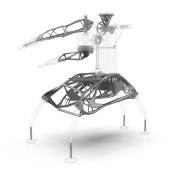
PRODUCTION / REALIZATION TECHNOLOGY: Gene leverages generative design algorithms to optimise the structure and material efficiency of the La Pavoni Europiccola espresso machine, utilising Fusion 360 software. Production methods include selective laser melting 3d printing for the main body, made from Ti-6Al-4V material, followed by sandblasting. The handle and legs are cnc-machined from aluminium and polished, while the boiler and brewing head retain La Pavoni’s original factory components. SPECIFICATIONS / TECHNICAL PROPERTIES: Dimensions: 310mm x 541mm x 495mm SLM 3D Printing Parts Ti-6Al-4V Handle and Legs: Aluminium (CNC Machining, polished) Case, Boiler: Stainless steel and copper TAGS: Generative design, 3D printing, metal 3D printing, espresso machine design, SLM, advanced manufacturing, structural optimisation, functional art, espresso machine RESEARCH ABSTRACT: This research focuses on leveraging generative design to optimise metal 3d printing, targeting lightweight structures, material efficiency, and distinctive, creative aesthetics. It starts with foundational behavioral and force analysis to establish a mechanical model. The study then explores shape control through obstacle constraints. Iterative design methods, force simulations, and the production of small prototypes were employed to test, refine, and optimise shapes, reducing material usage while ensuring performance and visual appeal. CHALLENGE: The primary challenge of this project lay in integrating data inputs for generative design with SLM 3d metal printing while ensuring harmony in aesthetics and functionality. Balancing constraints like material efficiency, structural integrity, and organic forms demanded precise obstacle control and iterative testing. Historically, redesigning an iconic espresso machine like La Pavoni introduced complexity in retaining its signature design elements. From a production standpoint, selective laser melting technology offered exceptional precision and weight control, allowing for minimal material and support usage while achieving enhanced strength. ADDED DATE: 2024-11-22 11:54:15 TEAM MEMBERS (1) : IMAGE CREDITS: Felix Ke Chen, 2024 PATENTS/COPYRIGHTS: Copyrights belong to Chen, 2024 |
||||
| Visit the following page to learn more: https://felixchen.net/lpgene | |||||
| CLIENT/STUDIO/BRAND DETAILS | |
 |
NAME: Felix Coffee Industries PROFILE: A Design Studio Collaborating with the Coffee Industry: From Small Coffee Farm Wastewater Treatment to Innovative Generative Design Espresso Machines. Recently, we are working on the Project Lombriz Nadando: An affordable and straightforward coffee wastewater filtration system based on vermifiltration, which utilises earthworms in an aerobic treatment process. Specifically designed for small coffee farms, it effectively minimises the environmental impact. |

| AWARD DETAILS | |
 |
Gene Espresso MacHine by Felix Ke Chen is Winner in Architecture, Building and Structure Design Category, 2024 - 2025.· Read the interview with designer Felix Ke Chen for design Gene here.· Press Members: Login or Register to request an exclusive interview with Felix Ke Chen. · Click here to register inorder to view the profile and other works by Felix Ke Chen. |
| SOCIAL |
| + Add to Likes / Favorites | Send to My Email | Comment | Testimonials | View Press-Release | Press Kit |
Did you like Felix Ke Chen's Architecture Design?
You will most likely enjoy other award winning architecture design as well.
Click here to view more Award Winning Architecture Design.
  |
 |