
Kouunji Kyakuden Reception Hall of Temple by Hiroaki Iwasa |
Home > Winners > #162806 |
 |
|
||||
| DESIGN DETAILS | |||||
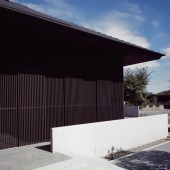
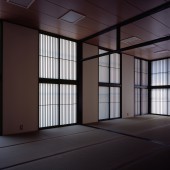
| DESIGN NAME: Kouunji Kyakuden PRIMARY FUNCTION: Reception Hall of Temple INSPIRATION: Researching the old reception hall and the landscape and history of the area provided architect with important inspiration. In particular, the old reception hall was tilted due to the soft ground, but it was discovered that some of the main structures, such as beams and columns, were valuable materials that are currently unavailable, and could be reused if repaired. And new architecture was important not only for its shape in the landscape, but also for its presence within the historical context. UNIQUE PROPERTIES / PROJECT DESCRIPTION: This project was the reconstruction of the reception hall of a Buddhist temple passed 140 years. The old reception hall had been loved by the local community for long time, but it was beyond the scope of repair. Therefore architect took on various creative challenges. He aimed to solve these issues by updating it to modern functions, harmonizing it with other facilities, and devising some mechanisms to pass on the memory of local society to the next generation. As a result, this architecture was able to achieve not a sense of nostalgia but also a presence for the future. OPERATION / FLOW / INTERACTION: Kouunji is an essential presence for the region. Because the parishioners of Kouunji are local residents and their relatives, and annual events and celebrations and condolences are mainly held for the parishioners. The reception hall, located to the side of the main hall, functions in conjunction with the main hall during events, and is used for religious ceremonies, waiting areas, dinners using the kitchen function, and a meeting place. It also functions as an emergency temporary evacuation center in the event of a disaster. There is also a temple office that oversees them. PROJECT DURATION AND LOCATION: The project started in February 2002 and was completed in November 2004 in Tsukubamirai City, Ibaraki Prefecture. FITS BEST INTO CATEGORY: Architecture, Building and Structure Design |
PRODUCTION / REALIZATION TECHNOLOGY: This project had a clear floor plan with each function directly connected around the entrance hall, but there were many difficult construction tasks in some places. Ground reinforcement and strong foundation construction for soft ground, woodwork including special joints to structurally reuse old materials, fabrication of delicate and movable cedar lattices, and the revival of forgotten traditional natural paints "Kumezo". This project was realized through thoughtful design and exceptional craftsmanship. SPECIFICATIONS / TECHNICAL PROPERTIES: Specification, Scale/ Wooden two-story building, Structure/ Timber frame structure, Site Area/ 3039.15 Square meter, Building Area/ 277.26 Square meter, Total Floor Area/ 323.77 Square meter, TAGS: temple, reception hall, reused, minimal philosophy, local landscape, passing on the memories, historical context, local community RESEARCH ABSTRACT: Type of Research: About the relationship between Kouunji and the local area. Methodology: History, landscape and topography research, annual event research, monk behavior research, and interviews with local residents, Conclusion: Kouunji is the core of the local community that people have visited since childhood for events and daily life. The architect concluded that in addition to modernizing the function of the ceremony hall and harmonizing it with other facilities, it was essential to create a mechanism to pass on the memory of the local community to the next generation. CHALLENGE: Various choices and challenges were made to pass on the memory of the local community. By choosing a common wooden house construction method rather than the traditional temple construction method, they were able to shorten the construction period, reduce construction costs, and as the result have time to repair and reuse old materials. The exterior has a roof shape unique to the region, and the walls and window lattices are finished with local cedar wood and with a revived traditional natural paint "Kumezo". As a result, this architecture achieved a special harmony and presence. ADDED DATE: 2024-06-27 07:09:48 TEAM MEMBERS (1) : IMAGE CREDITS: Photographer Kozo Takayama |
||||
| Visit the following page to learn more: http://www.iwasa-arch.com/ | |||||


| CLIENT/STUDIO/BRAND DETAILS | |
 |
NAME: Hiroaki Iwasa Architects Workshop PROFILE: Hiroaki Iwasa is a holistic architect with a 30-year career designing a variety of projects, from architecture to products to landscapes. He founded HIROAKI IWASA ARCHITECTS WORKSHOP in Tokyo, where he is the chief architect and holds the qualification of a first-class architect. In various projects, he grasps the situation from multiple perspectives and deep insight, approaches the issues honestly from the essential point of view, He has designed and realized rich environments that awaken the five human senses and satisfy a sense of well-being within landscapes, historical and cultural backgrounds. His various works, which emphasize the five human senses, have been realized in Japan and overseas, and have been praised in many fields and received numerous awards. |

| AWARD DETAILS | |
 |
Kouunji Kyakuden Reception Hall of Temple by Hiroaki Iwasa is Winner in Architecture, Building and Structure Design Category, 2024 - 2025.· Read the interview with designer Hiroaki Iwasa for design Kouunji Kyakuden here.· Press Members: Login or Register to request an exclusive interview with Hiroaki Iwasa. · Click here to register inorder to view the profile and other works by Hiroaki Iwasa. |
| SOCIAL |
| + Add to Likes / Favorites | Send to My Email | Comment | Testimonials | View Press-Release | Press Kit |
Did you like Hiroaki Iwasa's Architecture Design?
You will most likely enjoy other award winning architecture design as well.
Click here to view more Award Winning Architecture Design.
  |
 |