| THE AWARD |
| CATEGORIES |
| REGISTRATION |
| SUBMIT YOUR WORK |
| ENTRY INSTRUCTIONS |
| TERMS & CONDITIONS |
| PUBLICATIONS |
| DATES & FEES |
| METHODOLOGY |
| CONTACT |
| WINNERS |
| PRESS ROOM |
| GET INVOLVED |
| DESIGN PRIZE |
| DESIGN STORE |
| THE AWARD | JURY | CATEGORIES | REGISTRATION | PRESS | WINNERS | PUBLICATIONS | ENTRY INSTRUCTIONS |
Tony Hughes |
Home > Designer Profiles > Press Packs > Tony Hughes |
 |
 Press Members: Download Tony Hughes press kit as a single ZIP archive file. |
Tony Hughes Press Kit Contents
• Designer Profile: Tony Hughes
• Interview with the Designer: Tony Hughes
• Designer PR Images: Photos of Tony Hughes
| Design ID | #23742 |
| Project Name | Steganography Advertising Concept |
| Designer | Tony Hughes |
| Award Won | Bronze A' Idea and Conceptual Design Award in 2012 |
| Image Copyright | © 2012 Tony Hughes. Please kindly note that A' Design Award and Competition has been granted publishing rights to these images, accredited press members can use these images in their publications to feature the award winning works. |
| Image Filename | 8139-110123-steganography-advertising-concept |
Steganography Advertising Concept High-Resolution Photos
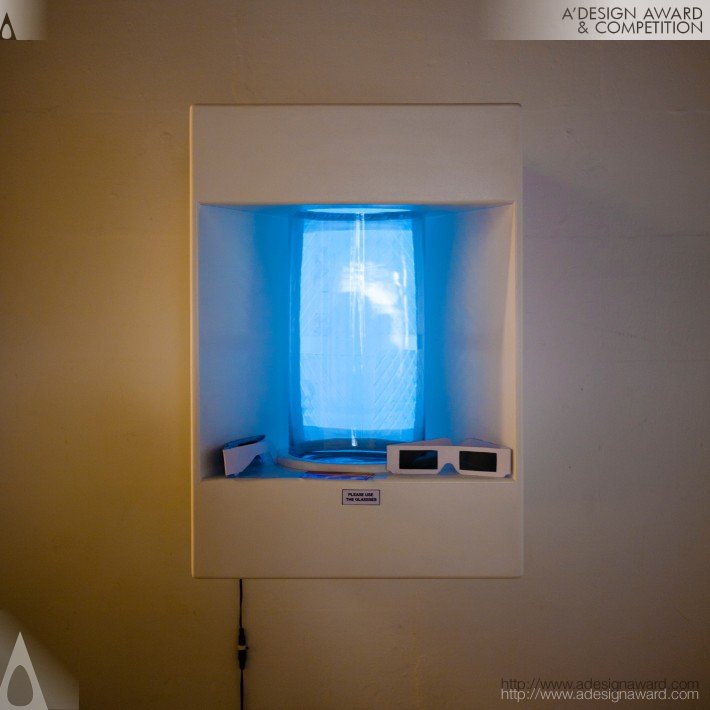
Steganography Advertising Concept by Tony Hughes
Available Downloads (Requires Login & Press Accreditation) :
· High-Resolution Image: 3600 x 3600 pixels, 6.89 MB.
· Unmasked Image: 710 x 710 pixels, 51.03 KB.
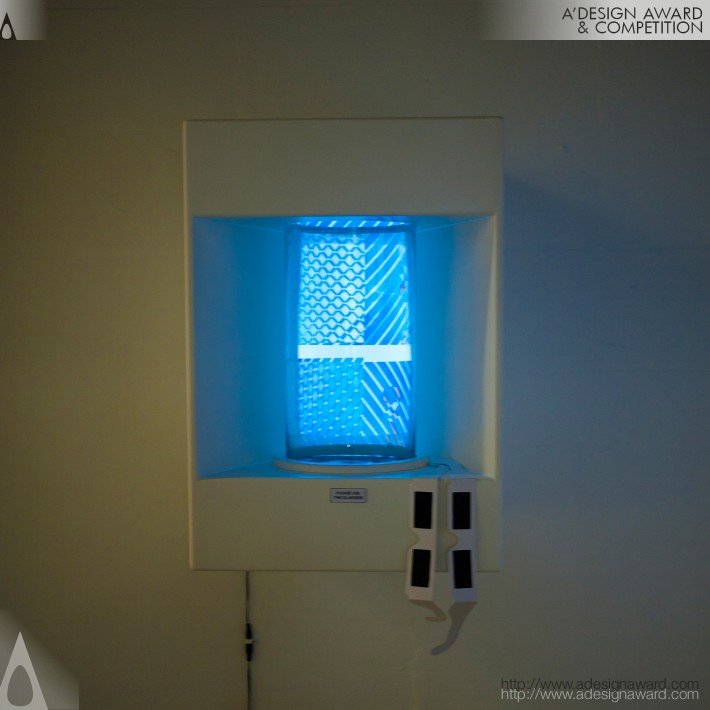
Steganography Advertising Concept - Tony Hughes
Available Downloads (Requires Login & Press Accreditation) :
· High-Resolution Image: 3600 x 3600 pixels, 6.84 MB.
· Unmasked Image: 710 x 710 pixels, 48.84 KB.
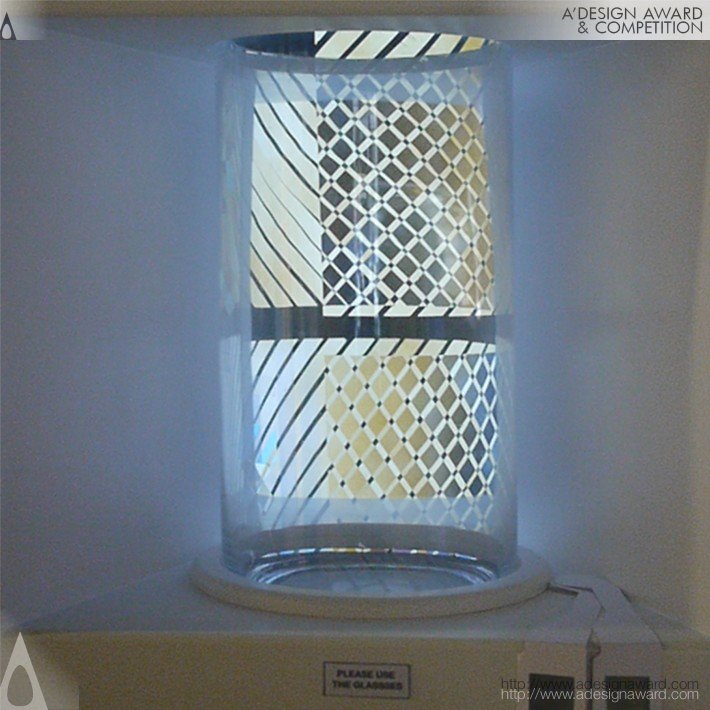
Steganography Advertising Concept designed by Tony Hughes
Available Downloads (Requires Login & Press Accreditation) :
· High-Resolution Image: 1800 x 1800 pixels, 1.31 MB.
· Unmasked Image: 710 x 710 pixels, 90.5 KB.
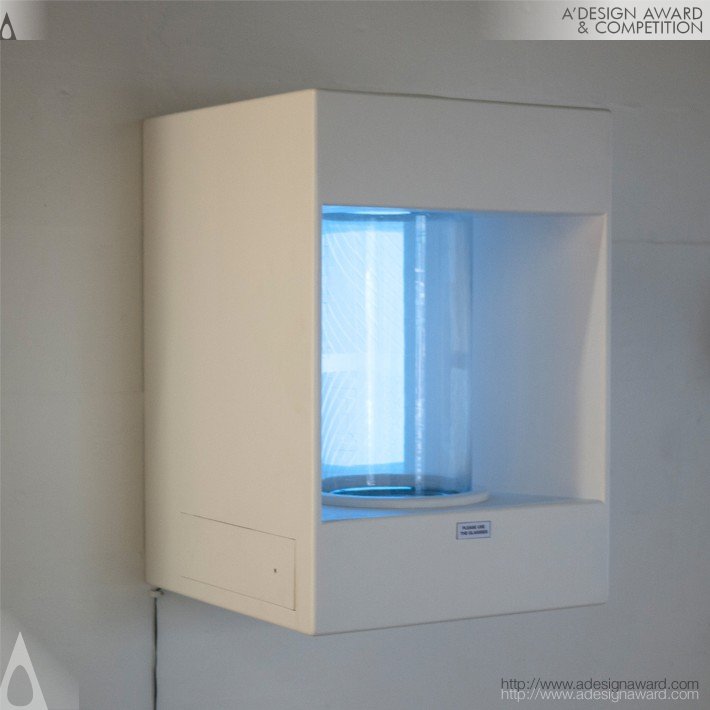
Tony Hughes Steganography Advertising Concept design
Available Downloads (Requires Login & Press Accreditation) :
· High-Resolution Image: 1800 x 1800 pixels, 1.12 MB.
· Unmasked Image: 710 x 710 pixels, 46.29 KB.
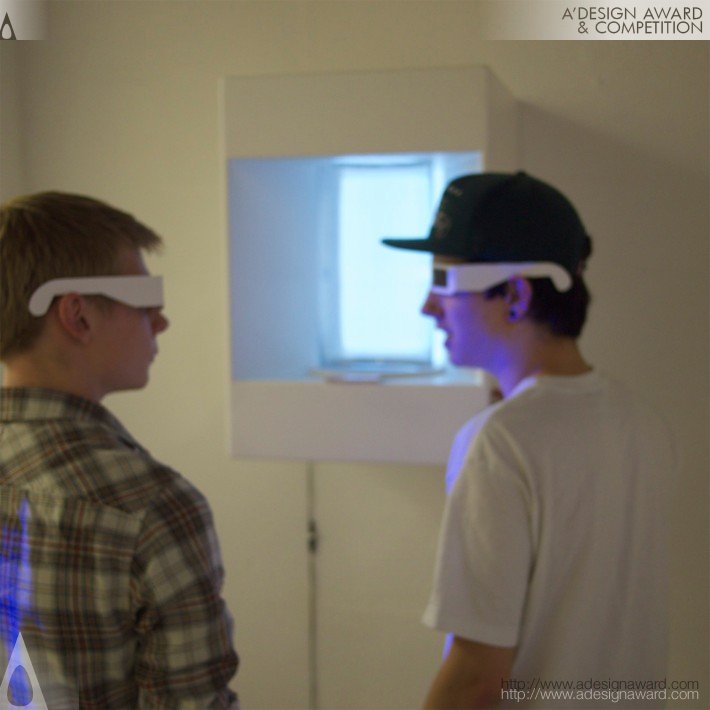
Steganography Advertising Concept Tony Hughes
Available Downloads (Requires Login & Press Accreditation) :
· High-Resolution Image: 1800 x 1800 pixels, 1.19 MB.
· Unmasked Image: 710 x 710 pixels, 49.29 KB.
Tony Hughes High-Resolution Photos
Available Downloads (Requires Login & Press Accreditation) :
· High-Resolution Image: 860 x 860 pixels, 139.37 KB.
· Unmasked Image: 710 x 710 pixels, 36.99 KB.

Tony Hughes PR-Images
Designer Interview
Interview with Tony Hughes at Wednesday 2nd of September 2026
FS: Could you please tell us more about your art and design background? What made you become an artist/designer? Have you always wanted to be a designer?
TH: My background is in graphic design and visual communication. I studied Graphic Design at Birmingham Metropolitan College, completing an HND, and then studied Design & Visual Communication at Birmingham City University, where I graduated with a BA (Hons), 2:1.
I’ve always been more interested in visual communication than what I would traditionally call “art”. I’m interested in taking an idea, a message or a complicated subject and finding a way to communicate it clearly.
I don’t remember having a childhood ambition of becoming a designer in the conventional sense. It was something I naturally gravitated towards. Over time, graphic design developed into branding, creative strategy, UX/UI and digital products.
What’s particularly interesting to me now is that technology has brought many of those disciplines together. I’m increasingly interested in what happens when design, AI and technology become part of the same creative process.
FS: Can you tell us more about your company / design studio?
TH: My background is in graphic design and visual communication. I studied Graphic Design at Birmingham Metropolitan College, completing an HND, and then studied Design & Visual Communication at Birmingham City University, where I graduated with a BA (Hons), 2:1.
I’ve always been more interested in visual communication than what I would traditionally call “art”. I’m interested in taking an idea, a message or a complicated subject and finding a way to communicate it clearly.
I don’t remember having a childhood ambition of becoming a designer in the conventional sense. It was something I naturally gravitated towards. Over time, graphic design developed into branding, creative strategy, UX/UI and digital products.
What’s particularly interesting to me now is that technology has brought many of those disciplines together. I’m increasingly interested in what happens when design, AI and technology become part of the same creative process.
FS: What is "design" for you?
TH: Design is making intentional decisions to achieve an outcome.
That’s deliberately broader than graphic design.
A logo is design. An interface is design. A product is design. The architecture of information is design. Even the way a complicated service works can be designed.
For me, design is fundamentally about taking complexity and giving it structure.
FS: What kinds of works do you like designing most?
TH: I enjoy projects where there is something difficult to understand.
Technology is particularly interesting to me because the underlying systems can be incredibly complicated, while the final experience ideally needs to feel simple.
I particularly enjoy branding, digital products, UX/UI and visual systems where I can influence the thinking behind the project rather than simply being handed a finished idea and asked to make it look attractive.
FS: What is your most favorite design, could you please tell more about it?
TH: I don’t really have one favourite piece of design.
If I had to choose a category, I’m fascinated by exceptionally well-designed systems rather than individual objects.
A great identity, for example, isn’t just a logo. It’s a visual language that continues working across hundreds or thousands of different applications.
Similarly, a great digital product isn’t one beautiful screen. It’s the underlying system that makes the whole experience coherent.
That’s the kind of design I find most interesting.
FS: What was the first thing you designed for a company?
TH: I don’t want to give you a fictional answer here. I don’t have sufficiently reliable information in my current context to identify the exact first commercial piece I ever designed.
My professional career goes back a long way, so there were many early projects before the work became as digitally focused as it is today.
FS: What is your favorite material / platform / technology?
TH: At the moment, probably AI as a medium.
Not simply generative AI for producing pictures, but AI as something that changes the way we think, design, prototype and build.
I’m particularly interested in local AI because it changes the relationship between the designer and the technology. You can have your own computational infrastructure rather than simply sending everything to a remote service.
That opens up some very interesting possibilities for creative work.
FS: When do you feel the most creative?
TH: Usually when I’m trying to understand something.
I’m probably more analytical than the stereotypical image of a designer. I don’t necessarily sit down and wait for inspiration.
A difficult problem tends to create the creative process for me.
Once I understand what something is really trying to achieve, ideas start appearing.
FS: Which aspects of a design do you focus more during designing?
TH: I want to know what the viewer or user is supposed to understand, what they should notice first and what action or thought should follow.
The visual treatment comes from those decisions.
FS: What kind of emotions do you feel when you design?
TH: Curiosity is probably the strongest one.
There’s also frustration, especially when something isn’t working, followed by a certain satisfaction when the pieces finally fall into place.
I don’t necessarily experience design as a constant state of inspiration. A lot of it is investigation and problem solving.
FS: What kind of emotions do you feel when your designs are realized?
TH: Relief first.
Then curiosity about how people actually respond to it.
Something can look perfect on your screen and behave very differently when it enters the real world. Seeing people actually use or interact with something is one of the best tests of the design.
FS: What makes a design successful?
TH: It achieves its purpose.
That’s more important than whether I personally think it looks beautiful.
If a product becomes easier to understand, a company becomes more credible or an interface becomes easier to use, then the design has succeeded.
A beautiful design that fails its purpose isn’t successful design.
FS: When judging a design as good or bad, which aspects do you consider first?
TH: First: Does it solve the problem?
Then I look at clarity, hierarchy, appropriateness, consistency and execution.
Only after that would I worry about whether I personally like it.
Personal taste and good design aren’t necessarily the same thing.
FS: From your point of view, what are the responsibilities of a designer for society and environment?
TH: Designers influence behaviour, expectations and understanding, so we have more responsibility than simply making things attractive.
We should consider accessibility, sustainability, honesty and the consequences of what we’re helping create.
Technology makes this particularly important. If you’re designing the interface to a financial product, an AI system or a critical service, your decisions can have consequences far beyond aesthetics.
FS: How do you think the "design field" is evolving? What is the future of design?
TH: The biggest change is the increasing convergence between design, technology and AI.
AI will automate a significant amount of the production work that designers currently do.
I don’t think that means designers become irrelevant. I think it makes the ability to think, judge, direct and understand problems more valuable.
The designer of the future may be less of a person sitting in front of Photoshop producing assets and more of a person orchestrating systems, technology and intelligent tools to produce outcomes.
FS: When was your last exhibition and where was it? And when do you want to hold your next exhibition?
TH: I don’t currently work primarily as an exhibiting artist, so I wouldn’t want to invent an exhibition history.
My work has predominantly been commercial and digital rather than gallery-based.
I’d be interested in exhibiting something in the future if there were a genuinely interesting concept behind it, particularly something exploring the relationship between design, AI and technology.
FS: Where does the design inspiration for your works come from? How do you feed your creativity? What are your sources of inspirations?
TH: A lot of my inspiration comes from outside conventional graphic design.
Technology, architecture, industrial design, interfaces, typography, financial systems, emerging technology and the way people interact with machines all interest me.
I’m also constantly investigating new technology.
I think curiosity is a better source of inspiration than deliberately looking for “design inspiration”.
FS: How would you describe your design style? What made you explore more this style and what are the main characteristics of your style? What's your approach to design?
TH: I’d describe my style less as a visual style and more as an approach.
I tend towards clarity, structure and restraint.
I’m not particularly interested in imposing a recognisable “Tony Hughes look” onto every project. The design should come from the problem and the organisation behind it.
My approach is essentially:
Understand → simplify → structure → communicate.
FS: Where do you live? Do you feel the cultural heritage of your country affects your designs? What are the pros and cons during designing as a result of living in your country?
TH: I currently live in Latvia.
My professional identity was largely formed in the UK, particularly through my education and early career, while living in Latvia has given me a different perspective on culture, technology and the European environment.
I don’t consciously try to make my work “Latvian” or “British”. I’m more interested in international communication, particularly because many of the companies I want to work with operate internationally.
FS: How do you work with companies?
TH: I try to understand the business before designing anything.
I want to know what the company actually does, who it needs to communicate with, what its competitors are doing and where the communication problem exists.
From there, the work might involve strategy, positioning, identity, UX/UI, digital products or a combination of those things.
FS: What are your suggestions to companies for working with a designer? How can companies select a good designer?
TH: Don’t select a designer purely because you like their portfolio.
Ask them how they think.
A designer should be able to explain why they made their decisions and should be willing to challenge the brief when the brief itself is the problem.
I’d also recommend giving designers enough information and enough responsibility to actually solve the problem. If you dictate every decision, you’re not really employing the designer’s expertise.
FS: Can you talk a little about your design process?
TH: It starts with understanding.
Then I try to define the actual problem.
After that comes research, exploration and developing possible directions. Once there’s a strong concept, I develop the visual or interactive system around it.
Finally, I test it against the original objective.
The important thing is that the process isn’t completely linear. You often discover the real problem while trying to solve it.
FS: What are 5 of your favorite design items at home?
TH: I don’t keep a curated collection of design objects, so I wouldn’t want to manufacture five favourites for the sake of the interview.
I’m much more attached to tools and technology than decorative design objects.
Computers, displays and the equipment I use to create and experiment with things are probably more significant to me than furniture or ornaments.
FS: Can you describe a day in your life?
TH: There isn’t really a standard day.
Some days are traditional design work: identity, interfaces, presentations or client work.
Other days are much more exploratory. I’ll be investigating AI, testing hardware, experimenting with software or thinking about how a new technology could change the way I work.
That’s one of the things I like about being independent. My work isn’t restricted to one narrow definition of design.
FS: Could you please share some pearls of wisdom for young designers? What are your suggestions to young, up and coming designers?
TH: Learn to think before you learn to decorate.
Learn typography. Learn composition. Learn communication. Learn how businesses work. Learn technology.
And don’t become emotionally attached to your first idea.
Your job isn’t to prove that your first idea was good. Your job is to find the best solution.
FS: From your perspective, what would you say are some positives and negatives of being a designer?
TH: The biggest positive is that you get to solve problems creatively.
You also get to work across many different industries, which means you can constantly learn.
The downside is that people sometimes misunderstand what design actually involves. They can see the final visual result without seeing the research, thinking and decision making behind it.
And as an independent designer, you also have to deal with the business side, which isn’t always creative or enjoyable.
FS: What is your "golden rule" in design?
TH: Make it clear.
If I had to reduce my design philosophy to three words, those would probably be them.
FS: What skills are most important for a designer?
TH: Judgement.
Then communication, curiosity, critical thinking and the ability to understand other disciplines.
Technical skills matter, but tools can be learned.
Good judgement takes much longer.
FS: Which tools do you use during design? What is inside your toolbox? Such as software, application, hardware, books, sources of inspiration etc.?
TH: Adobe tools have been an important part of my professional career, particularly for traditional graphic design and visual production.
I also work with digital design and prototyping tools, Apple hardware and increasingly AI systems.
More recently, I’ve become particularly interested in local AI infrastructure and running models on my own hardware. That has become almost an extension of the design toolbox for me.
The interesting thing is that my toolbox now contains both creative tools and computational infrastructure.
FS: Designing can sometimes be a really time consuming task, how do you manage your time?
TH: I try to separate exploration from production.
The biggest waste of time in design is polishing the wrong idea.
I’d rather spend time establishing whether the direction is correct before investing heavily in execution.
FS: How long does it take to design an object from beginning to end?
TH: It depends entirely on the object and the problem.
A simple graphic can take hours. A brand identity or digital product can take weeks or months.
The important variable isn’t how many hours it takes to make the final artwork. It’s how difficult the underlying problem is.
FS: What is the most frequently asked question to you, as a designer?
TH: Probably some variation of:
“Can you just make it look better?”
It’s an interesting question because “better” isn’t actually a design brief.
The first thing I want to know is: better for whom, and better in what way?
FS: What was your most important job experience?
TH: Working on technically complex projects has probably had the biggest impact on me.
My work with Soramitsu is particularly important because it brought together design, UX/UI and highly technical financial infrastructure.
Working around projects such as Bakong, Cambodia’s national digital payment infrastructure, fundamentally reinforced my interest in designing for complicated technological systems.
FS: Who are some of your clients?
TH: I’ve worked with a range of organisations across technology and digital products.
Soramitsu is one of the more significant examples, particularly because of the work around blockchain, digital finance and Bakong.
I’ve also worked with FilmChain and other technology-oriented organisations.
The common thread has increasingly been companies dealing with complicated technology or new digital products.
FS: What type of design work do you enjoy the most and why?
TH: The work where strategy and design overlap.
I like being given something complicated and having to figure out how it should be positioned, explained, structured and ultimately presented.
That’s more satisfying to me than simply producing an isolated graphic.
FS: What are your future plans? What is next for you?
TH: I’m moving further into the intersection of design, creative strategy, AI and technology.
I want to work with technically ambitious companies where design can influence the product and communication at a fundamental level.
I’m also interested in becoming increasingly capable of going from an idea to a working digital product, using AI to bridge some of the traditional gap between design and development.
FS: Do you work as a team, or do you develop your designs yourself?
TH: Both.
I’ve worked independently for much of my career, but I don’t believe good design has to be a solitary activity.
The ideal situation is often a small group of people with different expertise: design, technology, strategy and subject-matter knowledge.
I particularly like collaborating with people who know things I don’t.
FS: Do you have any works-in-progress being designed that you would like to talk about?
TH: Yes.
I’m exploring how AI can become part of the actual design and product-development process rather than simply being another tool for generating content.
I’m particularly interested in systems where you can move from an idea, through strategy and design, into a functioning digital product much faster than has traditionally been possible.
That’s an area I’m actively developing rather than something I would claim is already finished.
FS: How can people contact you?
TH: The primary place to see my work is my portfolio at https://tonyhughesdesign.com.
FS: Any other things you would like to cover that have not been covered in these questions?
TH: I’d probably emphasise that I don’t see my career as having a fixed endpoint.
I started in graphic design. Then came visual communication, branding, digital products, UX/UI, fintech and blockchain. Now I’m deeply interested in AI.
Those things might look like separate disciplines from the outside, but to me they’re all connected by the same question:
How do you take something complicated and make it understandable, useful and compelling?
That’s still what I’m trying to do.
The difference now is that the tools available to designers are changing incredibly quickly, and I want to be part of figuring out what that means rather than simply watching it happen.
FS: Thank you for providing us with this opportunity to interview you.
A' Design Award & Competition grants rights to press members and bloggers to use parts of this interview. This interview is provided as it is; DesignPRWire and A' Design Award & Competition cannot be held responsible for the answers given by participating designers.
PR Article |
| Learn More |
| References or Bibliography |
| Article Title |
| Description |
| Keywords |
| Paragraph 1 |
| Paragraph 2 |
| Paragraph 3 |
| Paragraph 4 |
| Paragraph 5 |
| Paragraph 6 |
| Paragraph 7 |
| Paragraph 8 |
| Paragraph 9 |
| Paragraph 10 |
| Paragraph 11 |
| Paragraph 12 |
| Paragraph 13 |
| Paragraph 14 |
| Paragraph 15 |
| Paragraph 16 |
| Paragraph 17 |
| Paragraph 18 |
| Paragraph 19 |
| Paragraph 20 |
  |
 |