
Pikapoo Dog Waste Pick-Up Robot by Yihan Luo and Zihang Zheng |
Home > Winners > #172728 |
 |
|
||||
| DESIGN DETAILS | |||||
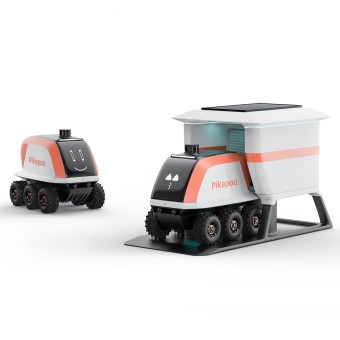
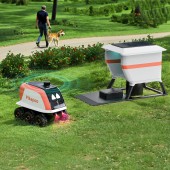
| DESIGN NAME: Pikapoo PRIMARY FUNCTION: Dog Waste Pick-Up Robot INSPIRATION: Cleaning up after pets is tedious, messy, and unpleasant. The diversity among dog owners can make it inconvenient for some to pick up dog waste; for example, elderly individuals may have difficulty bending down, and busy professionals may lack the time. When owners neglect this task, it results in unpleasant sights and polluted, unhealthy land. Pikapoo leverages robotic technology equipped with advanced olfactory and image recognition to offer an efficient solution. UNIQUE PROPERTIES / PROJECT DESCRIPTION: With approximately 900 million dogs owned globally, studies show that up to 50% of dog owners skip cleanup in secluded areas due to inconvenience and misconceptions. Dog waste harms the environment and disrupts public spaces. Pikapoo addresses this issue with a smart robotic system: the PooBot (a poop-collecting robot) that picks up waste, and the PooBase (a smart composting unit) that converts it into fertilizer, all managed through an app. OPERATION / FLOW / INTERACTION: Pikapoo is just one click away. Through the app, users request a PooBot to collect dog waste. After collection, the PooBot takes a sample for health monitoring, which is later delivered to the vet. The remaining waste is transported to the nearest PooBase, where it’s composted into organic fertilizer while the PooBot charges wirelessly. PROJECT DURATION AND LOCATION: Project was initiated since 2019 in Beijing, China. It has gone through rounds of variation and refinement, eventually finished in 2024 in Los Angeles. |
PRODUCTION / REALIZATION TECHNOLOGY: When PooBot deposits waste into PooBase, a specialized catalyzer containing all-natural microorganisms—inc SPECIFICATIONS / TECHNICAL PROPERTIES: 457.2 mm x 355.6 mm x 304.8 mm / 12.5KG TAGS: Robotics, Pet, Eco-Friendly Design, Sustainability, User-Centric Design, Social Impact RESEARCH ABSTRACT: For Pikapoo, we conducted a field research expedition to identify the problem: dog feces near gardens and plants were often left uncollected. Through secondary research, we found that improperly disposed dog feces contain enough bacteria to contaminate soil within a 20-mile radius. Additionally, we gathered feedback from over 100 dog-owning families. Many of them believed that dog poop is beneficial to the soil—but this is a misconception. CHALLENGE: The biggest challenge for Pikapoo is figuring out how to recycle dog feces in a way that benefits both the environment and dog owners. For dog owners, we identified an opportunity: in our product Poobot, we designed a system that transforms dog feces into a stool sample for health checks, which can then be picked up by a courier. To support environmental sustainability, Poobot sends the remaining waste to Poobase, where a built-in catalyzer processes the feces into fertilizer. ADDED DATE: 2025-04-03 03:58:41 TEAM MEMBERS (2) : Industrial Designer: Zihang (Matt) Zheng and Design Research and UIUX Designer: Yihan (Sakura) Luo IMAGE CREDITS: All Copyright Yihan Luo, Zihang Zheng |
||||


| CLIENT/STUDIO/BRAND DETAILS | |
 |
NAME: Yihan Luo and Zihang Zheng PROFILE: Pikapoo is a sustainability-driven design initiative that explores innovative solutions for urban pet waste management. Led by interdisciplinary designer and researcher Yihan Luo, who collaborates with Zihang Zheng, the project addresses the environmental impact of uncollected dog feces in public and green spaces. Through extensive field research, stakeholder interviews, and iterative prototyping, the team identified key behavioral and infrastructural deficiencies in existing pet waste disposal systems. The initiative introduces smart collection mechanisms and modular processing units that transform pet waste into valuable resources, including health screening data and organic fertilizer. By incorporating principles of interaction design, circular economy, and community engagement, Pikapoo aims to foster cleaner public environments and promote more responsible pet ownership. |

| AWARD DETAILS | |
 |
Pikapoo Dog Waste Pick-Up Robot by Yihan Luo and Zihang Zheng is Winner in Robotics, Automaton and Automation Design Category, 2024 - 2025.· Read the interview with designer Yihan Luo and Zihang Zheng for design Pikapoo here.· Press Members: Login or Register to request an exclusive interview with Yihan Luo and Zihang Zheng. · Click here to register inorder to view the profile and other works by Yihan Luo and Zihang Zheng. |
| SOCIAL |
| + Add to Likes / Favorites | Send to My Email | Comment | Testimonials | View Press-Release | Press Kit |
Did you like Yihan Luo and Zihang Zheng's Robotics Design?
You will most likely enjoy other award winning robotics design as well.
Click here to view more Award Winning Robotics Design.
  |
 |