
Pastoral Substation Public Infrastructure by Hang Chen |
Home > Winners > #172389 |
 |
|
||||
| DESIGN DETAILS | |||||
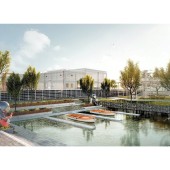
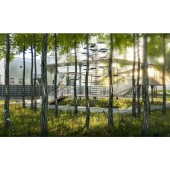
| DESIGN NAME: Pastoral Substation PRIMARY FUNCTION: Public Infrastructure INSPIRATION: Inspired by Shanghai’s ambition for sustainable infrastructure, the project revitalizes an industrial site into a green, interactive environment. The design integrates technological innovation with ecological strategies, drawing from the region’s agrarian and water-based heritage. By incorporating renewable energy and adaptive reuse, it envisions a future where essential infrastructure harmonizes with public life, reinforcing the city’s commitment to green urbanism. UNIQUE PROPERTIES / PROJECT DESCRIPTION: Pastoral Substation reimagines a 220kV power facility in Shanghai’s Minhang District, transforming it into an ecological and educational urban space. By integrating photovoltaic installations, kinetic energy devices, and interactive landscapes, the project merges renewable energy with public engagement. The design blurs boundaries between infrastructure and nature, redefining the substation as a sustainable community asset, fostering environmental awareness and urban connectivity. OPERATION / FLOW / INTERACTION: Visitors engage with renewable energy exhibits, interactive solar installations, and pedestrian-friendly networks. Kinetic energy pathways generate power through movement, reinforcing sustainability education. The space fosters community interaction through workshops, guided tours, and public events. By redefining infrastructure as an accessible learning environment, the project transforms a once-isolated facility into an active, inclusive urban landmark. PROJECT DURATION AND LOCATION: Located in Minhang District, Shanghai, China, the project aligns with Shanghai’s sustainable urban development initiatives. The transformation supports long-term ecological integration, enhancing urban resilience and energy-conscious city planning. |
PRODUCTION / REALIZATION TECHNOLOGY: The project employs solar panels, wind-powered installations, and rainwater collection systems to enhance sustainability. Locally sourced materials like steel, concrete, and timber ensure durability and contextual integration. Passive design strategies optimize natural ventilation and daylighting, reducing energy consumption. The landscape incorporates permeable surfaces and native vegetation, creating a resilient, self-sustaining environment that blends technology with ecological consciousness. SPECIFICATIONS / TECHNICAL PROPERTIES: The site spans 1.21 hectares, integrating substation infrastructure with eco-friendly landscapes and public engagement areas. A coordinated 3.49-hectare greenbelt enhances connectivity. Elevated walkways, solar canopies, and pedestrian pathways optimize multi-layered experiences, linking water, land, and energy systems. The design preserves natural elements, incorporating interactive learning spaces and sustainable mobility networks, setting a new standard for energy-conscious urban renewal. TAGS: Infrastructure, Renewable Energy, Urban Regeneration, Public Space, Ecological Landscape, Sustainable Design RESEARCH ABSTRACT: The project explores the convergence of urban infrastructure and ecological sustainability. Through studies on renewable energy integration, community engagement, and adaptive landscape strategies, it establishes a replicable model for substation renewal. The research emphasizes low-carbon construction, multi-functional green spaces, and innovative energy use, ensuring infrastructure aligns with environmental and social needs. CHALLENGE: The challenge was to transform a traditionally enclosed substation into a dynamic, community-friendly space while maintaining its technical functionality. Balancing security, accessibility, and energy efficiency required innovative spatial configurations. The design overcomes these constraints by integrating controlled public access zones, interactive elements, and renewable energy solutions, redefining infrastructure as a sustainable urban asset. ADDED DATE: 2025-03-27 12:07:02 TEAM MEMBERS (1) : Hang Chen IMAGE CREDITS: Hang Chen |
||||


| CLIENT/STUDIO/BRAND DETAILS | |
 |
NAME: WE-Me Group of Shenzhen Water Planning & Design Institute Co., Ltd. PROFILE: Based on the trend of interconnection in the metaverse, the "WE-Team" and "ME-Individual Designers" are integrated to promote the value orientation of "smart construction". Planning serves as the overall decision-making, landscape optimization shapes the spatial matrix, and architecture creates the carrier image. Tailored planning and design are conducted according to the specific commission, in line with regional development laws and maximizing comprehensive value. |

| AWARD DETAILS | |
 |
Pastoral Substation Public Infrastructure by Hang Chen is Winner in Engineering, Construction and Infrastructure Design Category, 2024 - 2025.· Read the interview with designer Hang Chen for design Pastoral Substation here.· Press Members: Login or Register to request an exclusive interview with Hang Chen. · Click here to register inorder to view the profile and other works by Hang Chen. |
| SOCIAL |
| + Add to Likes / Favorites | Send to My Email | Comment | Testimonials | View Press-Release | Press Kit |
Did you like Hang Chen's Infrastructure Design?
You will most likely enjoy other award winning infrastructure design as well.
Click here to view more Award Winning Infrastructure Design.
  |
 |