History Addict Education App by Xi Pang |
Home > Winners > #171909 |
 |
|
||||
| DESIGN DETAILS | |||||
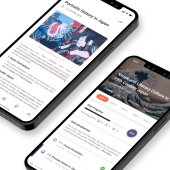
| DESIGN NAME: History Addict PRIMARY FUNCTION: Education App INSPIRATION: Learning history can be challenging sometimes. Firstly, memorizing various historical times and figures is difficult and time consuming. Secondly, existing learning materials feel tedious to some learners. To tackle these issues, I conducted research to explore effective learning tools that help users strengthen their memory, like family trees and flashcards. Afterwards, I leveraged these tools with gamification design to make the history learning process more entertaining and enjoyable. UNIQUE PROPERTIES / PROJECT DESCRIPTION: History Addict is an education app that turns the traditionally tedious history learning process into a gamification experience. It leverages data analytics and AI algorithms to suggest courses that match user interest. Besides, the app builds on effective learning tools recommended by historians and transforms them into interactive puzzles in the quiz module. As such, users can effectively consolidate their learning outcomes via the quiz while having a game like experience. OPERATION / FLOW / INTERACTION: All product features can be easily interacted with via common hand gestures. On the reading page, users can press and hold on text that they are interested in, then a toolbar will pop up giving them options to copy, highlight, or share the selected text. Plus, in the quiz module, users can solve the questions with multiple ways, like clicking on the right answer card or dragging and rearranging answer cards in the correct order. The variety of interaction adds more fun to the user experience. PROJECT DURATION AND LOCATION: The user research and low fidelity mockups of this project were completed between October and November of 2019 in Shanghai, China. In the spring of 2021, it was revamped with a new visual style and updated UI elements in Edinburgh, Scotland. The final stage of this project was conducted to further refine design details in 2024 in California, United States. FITS BEST INTO CATEGORY: Interface, Interaction and User Experience Design |
PRODUCTION / REALIZATION TECHNOLOGY: History Addict followed a human centred design process. At the start, the designer conducted extensive research to understand the problem space and user needs. Various tools were then used to extract research insights, like persona, user journey map, and qualitative coding. Based on the research findings, the designer created early prototypes to experiment with different directions. Eventually, hifi interfaces were crafted based on the final design idea. See the attached pdf for more details. SPECIFICATIONS / TECHNICAL PROPERTIES: Through data analytics, the home page feed automatically recommends courses that are currently trending based on other users interest on the app. On top of this, the app also leverages machine learning algorithms to suggest courses to the user based on his or her past searching, browsing, and learning behaviors. This ensures the user can get a good mix of familiar history topics that are similar to those they have learnt before and fresh history topics that they have not touched on yet. TAGS: Gamification Design, History Learning, Education App, Emotional Design RESEARCH ABSTRACT: Multiple research methods were adopted in this project, including literature review, competitor analysis, and user research. For example, extensive surveys were conducted to collect both qualitative and quantitative data from over 50 history learners of different age groups. The goal was to understand the users pain points, needs, learning preferences and expectations. For more detailed research results and insights, please refer to the uploaded pdf document due to the 500 character limit. CHALLENGE: The biggest challenge was to make the app entertaining and fun. There were some competitor products before History Addict so it is vital for the app to have a unique value proposition. I focused on the quiz as a breakthrough as it was often considered a daunting and tedious part in the learning process. Then I dedicated myself to active brainstorming and extensive literature review, which eventually helped me uncover various learning tools and turned them into game like puzzles for the quiz. ADDED DATE: 2025-03-14 02:01:57 TEAM MEMBERS (1) : Xi Pang IMAGE CREDITS: Image #1: Photographer Daniel Tseng, Photo of Kyoto, 2017. Image #2: Creator Katsushika Hokusai, The Great Wave off Kanagawa, 1831. Image #3: Photographer Daisy Chen, Photo of Kyoto, 2020. Image #4: Photographer Ryunosuke Kikuno, Photo of Samurai, 2020. Image #4: Photographer Susann Schuster, Photo of Kabuki, 2021. Image #5: Illustrator Storyset, Grades Concept Illustration, 2021. PATENTS/COPYRIGHTS: Copyrights belong to Xi Pang, 2025. |
||||
| Visit the following page to learn more: https://www.xipang.art | |||||


| CLIENT/STUDIO/BRAND DETAILS | |
 |
NAME: X Design Studio PROFILE: X Design Studio is a seasoned design agency with deep expertise in product design. It has partnered with leading global organizations such as Microsoft, IBM, and eBay, contributing to a diverse portfolio of industry projects. Its recent work spans across Web3, SaaS, enterprise platforms, ecommerce, and gig economy services. At the core of everything, the mission of X Design Studio is to empower both businesses and everyday users through purposeful, impactful design. |

| AWARD DETAILS | |
 |
History Addict Education App by Xi Pang is Winner in Education, Teaching Aid and Training Content Design Category, 2024 - 2025.· Read the interview with designer Xi Pang for design History Addict here.· Press Members: Login or Register to request an exclusive interview with Xi Pang. · Click here to register inorder to view the profile and other works by Xi Pang. |
| SOCIAL |
| + Add to Likes / Favorites | Send to My Email | Comment | Testimonials | View Press-Release | Press Kit |
Did you like Xi Pang's Education Design?
You will most likely enjoy other award winning education design as well.
Click here to view more Award Winning Education Design.
  |
 |