
Care Mi Healthcare App by Xingyu Tao, Wenwen Nong and Ming Xu |
Home > Winners > #170952 |
 |
|
||||
| DESIGN DETAILS | |||||
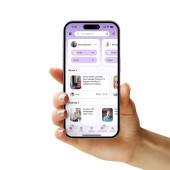
| DESIGN NAME: Care Mi PRIMARY FUNCTION: Healthcare App INSPIRATION: The U.S. population is aging rapidly, with over 6.7 million Americans aged 65 and older living with dementia, a number expected to rise. Globally, more than 55 million people have dementia, placing emotional, financial, and physical strain on caregivers. Both family and professional caregivers often lack support. CareMi bridges this gap by empowering caregivers, addressing healthcare disparities, and fostering a global support network. UNIQUE PROPERTIES / PROJECT DESCRIPTION: CareMi is a digital platform designed to support dementia caregivers. It offers AI tools for patient management, medication tracking, mental health, and telemedicine and legal assistance. The platform also connects caregivers through community support, facilitates learning through incentivized training, and fosters local networks. These features empower caregivers, improving their health and the quality of life for caregivers and their loved ones. OPERATION / FLOW / INTERACTION: CareMi simplifies caregiving with personalized support and seamless coordination between caregivers and healthcare providers. Users can track patient needs, receive guidance, and connect with a supportive community. The platform reduces stress by streamlining tasks, offering emotional support, and ensuring caregivers are never alone. With AI-powered tools and easy access to resources, CareMi helps caregivers provide better care while maintaining their well-being. PROJECT DURATION AND LOCATION: CareMi began in March 2024 and is refining its product through user testing with Beta University and senior healthcare institutions. The team gathers feedback and recruits developers to enhance AI for B2C and B2B solutions. In the next 4 to 6 months, AI development will expand to predictive analytics and real-time monitoring to meet the needs of caregivers and institutions. |
PRODUCTION / REALIZATION TECHNOLOGY: The team transformed six key insights into concept sketches and wireframes, refining them through collaborative sessions. Early testing ensured usability and strengthened understanding of caregiving challenges. A structured design system guided high fidelity prototypes, which were improved based on user feedback to enhance interaction. Testing confirmed the ability of CareMi to support both practical and emotional caregiving needs, establishing it as a complete solution for Alzheimer care. SPECIFICATIONS / TECHNICAL PROPERTIES: CareMi is a digital platform supporting dementia caregivers with AI guidance, personalized dashboards, and a caregiver community. Built with a React frontend, Node.js backend, and Firebase for real-time data, it integrates sentiment analysis and predictive analytics to monitor stress and offer recommendations. Features include smart reminders, a caregiving chatbot, and gamified well-being tools. Security measures ensure HIPAA/GDPR compliance. The team is refining the MVP for Beta University. TAGS: Alzheimers Care, Caregiver Support, AI for Healthcare, Design for Good, Health Tech, Community Support, Incentivization RESEARCH ABSTRACT: The CareMi team conducted thorough research to understand the needs of Alzheimer caregivers. Through surveys, interviews, and direct observations, they gathered insights from both family and professional caregivers. Competitor analysis identified service gaps, ensuring CareMi provides distinct solutions. By using empathy mapping and value models, the team developed user personas and a clear goal to offer personalized guidance that reduces stress and increases caregiver confidence. CHALLENGE: The main UX challenge was addressing the varied and complex needs of Alzheimer caregivers by balancing task management with emotional support. Family caregivers often lack training, while professionals manage multiple patients under pressure, creating different challenges. Designing an intuitive system that simplifies caregiving and offers emotional reassurance required continuous testing and refinement based on user feedback. ADDED DATE: 2025-02-28 12:10:45 TEAM MEMBERS (1) : Xingyu (Catherine) Tao, Wenwen (Flora) Nong, Ming Xu IMAGE CREDITS: Xingyu Tao, Wenwen Nong and Ming Xu, 2024. |
||||
| Visit the following page to learn more: https://caremi.mingxu.me/ | |||||


| CLIENT/STUDIO/BRAND DETAILS | |
 |
NAME: CareMi PROFILE: CareMi is a digital platform designed to support Dementia caregivers. It offers AI tools for patient management, medication tracking, and mental health, alongside telemedicine and legal assistance. The platform also connects caregivers through community support, facilitates learning through incentivized training, and fosters local networks. These features empower caregivers, improving their health and enhancing the quality of life for both caregivers and their loved ones. |

| AWARD DETAILS | |
 |
Care Mi Healthcare App by Xingyu Tao, Wenwen Nong and Ming Xu is Winner in Mobile Technologies, Applications and Software Design Category, 2024 - 2025.· Read the interview with designer Xingyu Tao, Wenwen Nong and Ming Xu for design Care Mi here.· Press Members: Login or Register to request an exclusive interview with Xingyu Tao, Wenwen Nong and Ming Xu. · Click here to register inorder to view the profile and other works by Xingyu Tao, Wenwen Nong and Ming Xu. |
| SOCIAL |
| + Add to Likes / Favorites | Send to My Email | Comment | Testimonials | View Press-Release | Press Kit |
Did you like Xingyu Tao, Wenwen Nong and Ming Xu's Mobile Design?
You will most likely enjoy other award winning mobile design as well.
Click here to view more Award Winning Mobile Design.
  |
 |