Expanding U Art Experiment by Nouzha Evans |
Home > Winners > #170127 |
 |
|
||||
| DESIGN DETAILS | |||||
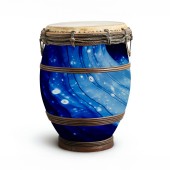
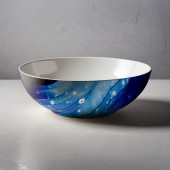
| DESIGN NAME: Expanding U PRIMARY FUNCTION: Art Experiment INSPIRATION: As a child in Morocco's Middle Atlas Mountains, the artist often gazed at the stars and asked: why no stars adorned the ground around her or hung in the air. Feeling excluded from the beauty of the sky, it was only after moving to California 41 years ago that she learned about our place in the Milky Way galaxy and the vastness of the universe. This understanding brought her a sense of belonging, transforming her childhood feelings of isolation into creativity and curiosity about astrophysics. Her unique perspective informs her art, as she aims to create pieces that reflect scientific insights rather than simply replicate Hubble's images. For her, scientific knowledge is a source of empowerment. UNIQUE PROPERTIES / PROJECT DESCRIPTION: The Design is a unique blend of art and science, operating in a collection of keyframes stemming from a groundbreaking single experiment. This transformation from the traditional painting offers results rooted in a scientific process, research, and knowledge, encouraging further exploration and inspiring astrophysicists by merging scientific principles with artistic expression. This Design redefines the relationship between art and science by introducing a dynamic entanglement concept reflecting an expanding universe. OPERATION / FLOW / INTERACTION: The design skillfully blends audience interaction and engagement, fostering dynamic dialogue and meaningful connections among participants. This artwork captivates the audience by integrating various art forms – visual arts and music—within a meticulously structured methodology and clearly defined frameworks. It creates thrilling opportunities for collaboration and exploration. Attendees are encouraged to participate actively, allowing for a richer, more immersive experience that invites diverse perspectives and innovative ideas. PROJECT DURATION AND LOCATION: Location: San Rafael, California. Duration: Testing phase: July 2010. Frieze and refrigerate the final frame: July 2010. The submitted image is one of multiple frames generated from the same art-science experiment. FITS BEST INTO CATEGORY: Fine Arts and Art Installation Design |
PRODUCTION / REALIZATION TECHNOLOGY: Here is a segment from the artist's communication with an astrophysicist responding to her letter: Professor Mark... It is certainly possible to perform laboratory experiments that shed insight into astrophysical phenomena. An example is the use of laser-produced shocks to study how shocks behave in the interstellar medium. However, the dominant force in shaping the behavior of galaxies is gravity, and to my knowledge there is no simple laboratory analog for a self-gravitating system. In the laboratory, all the masses we deal we deal with are so small that their self-gravity is insignificant compared to the other forces. A system where the dominant force is electromagnetic, for example, doesn't generally have the property that every part attracts every other part, as a gravitating system does. Similarly, paint on a surface is governed by complex forces of static electricity, surface tension, etc... SPECIFICATIONS / TECHNICAL PROPERTIES: 12" x 12" 30 x 30 cm Aluminum sheet – with amounts of other metals (Iron & silicon) Colors: Three shades of Bleu TAGS: Model, Scale factor, Hubble flow, Redshift, Density, Energy, Art, Paint, Aluminum, Gravity RESEARCH ABSTRACT: Exploring the connection between art and astrophysics can lead to innovative solutions. Three key factors inspire this design: 1. telescope images' captivating colors and shapes significantly influence the artwork. 2. The complex challenges in astrophysics at the intersection of theoretical physics, observational astronomy, and computational science are a source of inspiration for the designer, who seeks to learn from what physicists share with the curious public. 3. breakthroughs in astrophysics often occur at the intersection of traditional and emerging fields. This design aims to bring art to the dialogue on innovative connections, such as visualizing complex data or applying astrophysical concepts creatively. CHALLENGE: Isn't unifying the four fundamental forces a dream for every astrophysicist? What sets the physics in an artist's studio apart? • The images from the experiment resemble galaxy photos, but the underlying mechanisms differ. Our limited understanding of the physics behind the shapes and sizes means we use various colors and rely on tension, collisions, and fluid chemistry to create the observed designs. • Each element influences the outcome, but their interplay is crucial. When the paint dries, we capture a moment of stability while keeping it active, allowing for continuous evolution. • Both an artist's studio and a scientist's lab exist in the same universe, governed by similar forces. Both astrophysicists and artists appreciate this connection. However, the submitted model's designer lacks a scientist's tools and knowledge, leaving valuable insights locked within the model, waiting to be tested in a laboratory. ADDED DATE: 2025-02-26 14:30:51 TEAM MEMBERS (1) : Nouzha Evans Artist, Creative Director IMAGE CREDITS: Copyright: 1-14828118051 Expanding U, work of the visual arts Upload Status: Complete PATENTS/COPYRIGHTS: Expanding U Visual artwork Registered Copyright to Nouzha Evans U.S. Copyright Office 101 Independence Ave. S.E. Washington, D.C. 20559-6000 |
||||
| Visit the following page to learn more: https://x.com/NouzhaEvans | |||||
| CLIENT/STUDIO/BRAND DETAILS | |
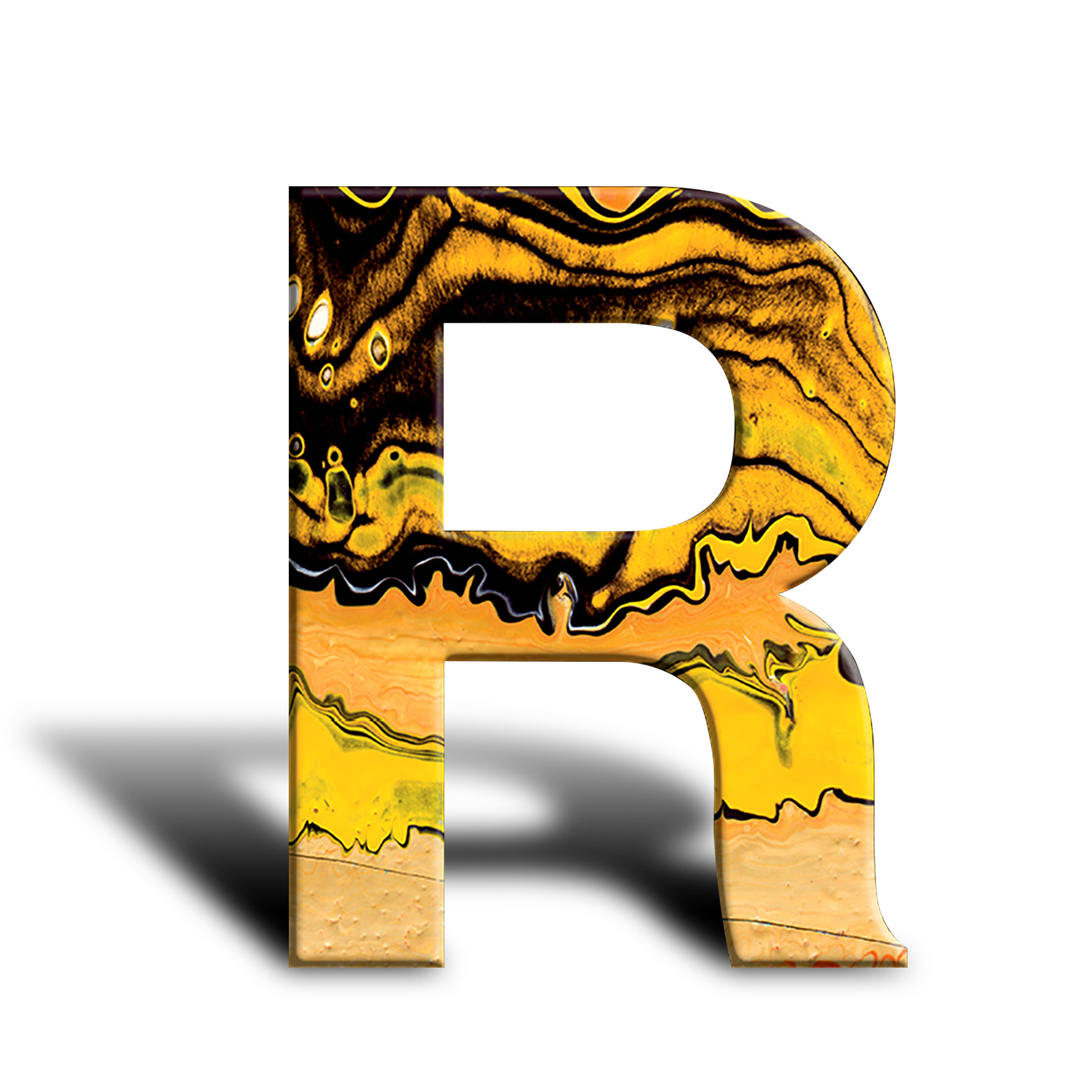 |
NAME: Radius Art Gallery PROFILE: The (R) logo in the artist's Radius Art Studio is more than just a design; it symbolizes a captivating world of geometry. It represents the radius, the distance from a circle's center to its edge, a fundamental concept in understanding circles. A circle has many equal-length radii, and the radius can be calculated by dividing the diameter by two. For example, Earth's diameter is 7,926.2 miles, making its radius approximately 3,963.1 miles (or 6,371 kilometers). Radius Art Studio was initially a space for the artist's experimental work. In January 2025, it evolved into Radius Art Gallery LLC, fostering a small community of artists, scientists, writers, and poets. |

| AWARD DETAILS | |
 |
Expanding U Art Experiment by Nouzha Evans is Winner in Digital Art Category, 2024 - 2025.· Read the interview with designer Nouzha Evans for design Expanding U here.· Press Members: Login or Register to request an exclusive interview with Nouzha Evans. · Click here to register inorder to view the profile and other works by Nouzha Evans. |
| SOCIAL |
| + Add to Likes / Favorites | Send to My Email | Comment | Testimonials | View Press-Release | Press Kit |
Did you like Nouzha Evans' Digital Art Design?
You will most likely enjoy other award winning digital art design as well.
Click here to view more Award Winning Digital Art Design.
  |
 |