
The Basalt Modular Recycling Bin by Teming Kang |
Home > Winners > #169446 |
 |
|
||||
| DESIGN DETAILS | |||||
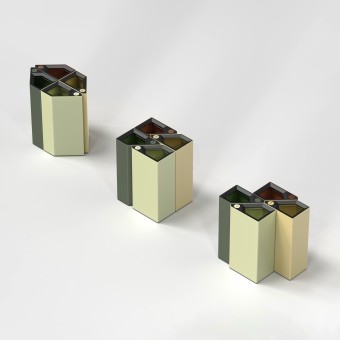
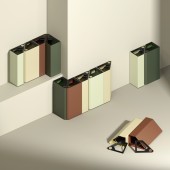
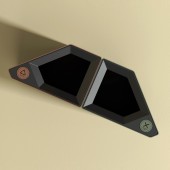
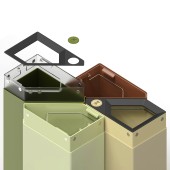
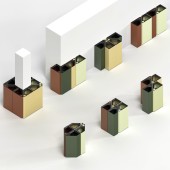
| DESIGN NAME: The Basalt PRIMARY FUNCTION: Modular Recycling Bin INSPIRATION: The design inspiration for The Basalt comes from the columnar jointing structure of natural basalt. Its unique geometric shape makes it particularly suitable for today’s diverse and ever changing public spaces. Through the clever combination of modular design and geometric patterns, it is not only simple and stylish in appearance, but also highly flexible. It can be freely combined and customized to meet the waste recycling and sorting needs of different environments. UNIQUE PROPERTIES / PROJECT DESCRIPTION: The shape of this design is derived from geometric principles and designed to be infinitely repeatable, allowing it to adapt to different environmental spaces and recycling needs. Another feature is that each module of the recycle bin is connected using invisible magnet, which is a departure from traditional connection methods. This design preserves the integrity and aesthetics of the entire structure to the greatest extent. These unique design elements add a perfect blend of natural and modern aesthetics to The Basalt. OPERATION / FLOW / INTERACTION: The operation of the modular recycling bin is straightforward. First, determine the desired combination configuration. Once the configuration is decided, place the magnets at the corresponding positions on the inner compartment. Afterward, insert the inner compartment into the main body of the bin and arrange the modules according to the chosen configuration. PROJECT DURATION AND LOCATION: The project started in September 2024 in Guangzhou, China, and was completed in February 2025. FITS BEST INTO CATEGORY: Furniture Design |
PRODUCTION / REALIZATION TECHNOLOGY: The body and lid of the recycling bin are formed using aluminum alloy bending, followed by polishing and powder coating. The inner compartment and label cover are made using plastic injection molding. During assembly, self-tapping screws are used to attach the inner compartment's collar, and then the entire inner compartment is inserted into the bin body to complete the assembly. SPECIFICATIONS / TECHNICAL PROPERTIES: Dimension: Width 360mm * Depth 240mm * Height 710mm TAGS: Modular Design, Recycle, Recycling Bin, Public Space, Configuration, Magnet, Airport RESEARCH ABSTRACT: Type of Research: The research was exploratory and applied, focusing on understanding the needs for flexible, adaptable waste management solutions in public spaces. Research Objectives: The primary goal was to design a modular system that can be customized for different environments, improving the functionality and aesthetic integration of trash bins in public spaces. Data Collection and Research Tools: Data was collected through surveys, interviews with waste management professionals, and analysis of existing trash bin designs. Tools used included 3D modeling software and material testing methods. Participants or Experiments: The study involved interviews with airport facility managers, urban planners, and users to gather insights into waste sorting needs and spatial constraints in public areas. Results: The research identified a clear demand for flexible, modular systems that can adapt to different waste categories and spatial layouts. The design’s use of magnets for easy assembly and reconfiguration was particularly well-received. Insights and Impacts: The study revealed that modular designs could increase efficiency in waste management, improve user experience, and reduce operational costs. It also highlighted the importance of aesthetic and functional integration in public space design. Effect of the Research in Real-Life Phenomena: The research has the potential to influence how public spaces approach waste management, offering more adaptable solutions that cater to the evolving needs of modern urban environments. This could lead to more sustainable and user-friendly designs in public infrastructure, impacting both business operations and society’s approach to waste. CHALLENGE: The most challenging aspect was finding an aesthetically pleasing solution for the combination of different modules. Using hardware or connectors would require drilling holes into the bin body, which becomes cumbersome with multiple configurations, resulting in numerous holes. Ultimately, the issue was addressed by integrating magnets into the design, eliminating the need for drilling and maintaining the visual integrity of the recycle bin. ADDED DATE: 2025-02-24 02:13:19 TEAM MEMBERS (1) : IMAGE CREDITS: Teming Kang, 2024. |
||||
| CLIENT/STUDIO/BRAND DETAILS | |
 |
NAME: OSHUJIAN PROFILE: Guangdong Oshujian Furniture Co., Ltd. was founded in 2000. It is a modern enterprise that integrates design and development, production, installation and commissioning, and pre-sale and after-sale services. Its core business specializes in airport furniture and supporting products, including airport seating, multifunctional counters, special chairs, charging bars, isolation belts, public trash bins, luggage trolleys, leisure sofas, public information signage, commercial advertising light boxes, office furniture, and other related products. The sales network covers the entire country, and its export network spans the globe. The company adheres to the business philosophy of "Integrity and diligence, innovation and efficiency, mutual prosperity and symbiosis," creating personalized and stylish airport spaces for its clients. |

| AWARD DETAILS | |
 |
The Basalt Modular Recycling Bin by Teming Kang is Winner in Furniture Design Category, 2024 - 2025.· Read the interview with designer Teming Kang for design The Basalt here.· Press Members: Login or Register to request an exclusive interview with Teming Kang. · Click here to register inorder to view the profile and other works by Teming Kang. |
| SOCIAL |
| + Add to Likes / Favorites | Send to My Email | Comment | Testimonials | View Press-Release | Press Kit |
Did you like Teming Kang's Furniture Design?
You will most likely enjoy other award winning furniture design as well.
Click here to view more Award Winning Furniture Design.
  |
 |