
SkinAI Skin Analyzer by Melisa Aksun |
Home > Winners > #167348 |
 |
|
||||
| DESIGN DETAILS | |||||
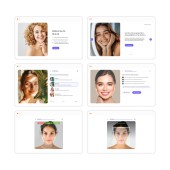
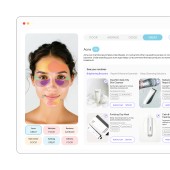
| DESIGN NAME: SkinAI PRIMARY FUNCTION: Skin Analyzer INSPIRATION: Skin AI was inspired by the need to help individuals better understand and improve their skin health. The concept emerged from the idea that personalized analyses focused on specific skin concerns could simplify users' journeys toward the right products. Leveraging the broad accessibility of mobile devices, the tool aims to offer an easy-to-use solution available anywhere, at any time. UNIQUE PROPERTIES / PROJECT DESCRIPTION: Skin AI is a browser-based skin analysis tool for desktop and mobile platforms. Users answer skin-related questions, take a guided face photo, and receive health scores for six key skin concerns via advanced machine learning. Personalized product recommendations are provided, enabling users to explore or shop directly. Designed with a mobile-first approach, Skin AI delivers an intuitive, seamless user experience. OPERATION / FLOW / INTERACTION: The design simplifies the skin analysis process through a user-friendly interface that guides the audience step by step. Users answer a brief set of questions and upload a selfie, allowing the tool to analyze their skin conditions and generate a personalized report. The system ensures ease of use with minimal steps, intuitive navigation, and instant results, fostering trust and emotional engagement with its precise and relatable insights. PROJECT DURATION AND LOCATION: The project started in February 2024 in Istanbul and was finalized in May 2024. Initial research and prototyping phases were conducted remotely, leveraging digital collaboration tools. Key milestones included usability testing, visual refinement, and AI integration, which contributed to the project success. FITS BEST INTO CATEGORY: Interface, Interaction and User Experience Design |
PRODUCTION / REALIZATION TECHNOLOGY: I used Figma for design all interfaces, complemented by user testing via Miro and Figjam. Visual assets were generated with AI tools using specific prompts to ensure alignment with the project concept. High fidelity visuals were finalized in Photoshop, prioritizing a polished, user friendly design. SPECIFICATIONS / TECHNICAL PROPERTIES: The digital interface design follows a responsive format suitable for multiple devices. TAGS: Skin Analysis Tool, User Interface Design, UX/UI Design, Responsive Interface, AI-Driven Design, Skincare Technology, Interactive Design, Usability Testing, Prototyping RESEARCH ABSTRACT: My research began with understanding the real needs and frustrations of users when it comes to skin analysis tools. I aimed to create a design that was not only technologically advanced but also approachable and easy to use. I conducted user surveys, interviewed industry experts, and analyzed competitors to gain a comprehensive perspective. These efforts helped me identify key areas to focus on, such as interface usability, visual clarity, and accessibility. The insights I gathered shaped every stage of my iterative design process, ensuring the final product met both user expectations and functional requirements. CHALLENGE: Balancing advanced AI functionality with an intuitive design was the primary challenge. Ensuring inclusivity for diverse skin tones required sourcing varied datasets and refining the visual output. Iterative usability testing and a focus on responsive design helped overcome technical and user centered challenges. ADDED DATE: 2025-01-19 07:45:46 TEAM MEMBERS (1) : IMAGE CREDITS: Melisa Aksun, 2024. |
||||


| CLIENT/STUDIO/BRAND DETAILS | |
 |
NAME: PulpoAR PROFILE: PulpoAR is a leading technology company specializing in augmented reality (AR) solutions designed to enhance customer engagement and experiences. With a focus on beauty, fashion, and retail industries, PulpoAR develops innovative tools such as AR based virtual try ons, personalized recommendations, and AI driven insights. The company's cutting-edge technology bridges the gap between online and offline retail, enabling businesses to provide immersive and interactive shopping journeys. PulpoAR’s solutions are tailored to help brands increase conversion rates, reduce returns, and elevate customer satisfaction. Trusted by global brands and enterprises, PulpoAR continuously pushes the boundaries of AR and AI to deliver scalable, efficient, and impactful solutions that meet the evolving demands of the digital marketplace. |

| AWARD DETAILS | |
 |
Skinai Skin Analyzer by Melisa Aksun is Winner in Digital Product Design Category, 2024 - 2025.· Read the interview with designer Melisa Aksun for design SkinAI here.· Press Members: Login or Register to request an exclusive interview with Melisa Aksun. · Click here to register inorder to view the profile and other works by Melisa Aksun. |
| SOCIAL |
| + Add to Likes / Favorites | Send to My Email | Comment | Testimonials | View Press-Release | Press Kit |
Did you like Melisa Aksun's Digital Product Design?
You will most likely enjoy other award winning digital product design as well.
Click here to view more Award Winning Digital Product Design.
  |
 |