
Flow AI Web App by Qianhua Ge |
Home > Winners > #164183 |
 |
|
||||
| DESIGN DETAILS | |||||
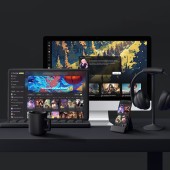
| DESIGN NAME: Flow PRIMARY FUNCTION: AI Web App INSPIRATION: Flow was inspired by the need to humanize AI interactions, moving away from cold, utilitarian tools toward more emotionally engaging experiences. As AI becomes a greater part of our daily lives, Flow seeks to make this technology approachable, creative, and personalized. Drawing inspiration from social platforms and interactive content creation tools, Flow integrates AI in a way that empowers users to not just consume, but to create and shape AI to fit their personal and creative needs. UNIQUE PROPERTIES / PROJECT DESCRIPTION: Flow revolutionizes AI interaction by transforming AI into personalized companions. With over 1 million unique, customizable bots, Flow enables seamless interaction, allowing effortless AI-generated content creation such as bots and short films. Its minimalist interface, optimized for mobile and desktop, incorporates micro-interactions, enhancing usability, accessibility, personalization, and engagement in a 2C landscape. OPERATION / FLOW / INTERACTION: Flow operates with intuitive interaction points such as swiping, tapping, and drag-and-drop on mobile devices, and click-and-drag functionality on desktop. Users can seamlessly move from creating AI bots to generating content like short films with simple, guided steps. Micro-interactions like hover effects and real-time feedback offer continuous engagement, while swipe, tap, and drag-and-drop makes content creation fluid. The user journey, designed to eliminate friction, allows users to go from concept to AI-generated content in just minutes, making Flow an ideal platform for those seeking both fun and productivity. PROJECT DURATION AND LOCATION: The project started in January 2023 in Berkeley, California. The current design submission represents the latest iteration of the product, which was completed in Shanghai, China. While this version is finished, Flow continues to undergo iterative improvements and updates to enhance the user experience and incorporate new technologies. |
PRODUCTION / REALIZATION TECHNOLOGY: Flow was developed using advanced front-end web technologies like ReactJS and mobile frameworks optimized for performance and scalability. The back-end system leverages cloud-based AI models, ensuring real-time processing and content generation. UI/UX design was crafted with Adobe XD and Figma, focusing on seamless interaction across platforms. The design is responsive and optimized for touch and gesture-based interactions, ensuring smooth performance on both mobile and desktop environments. SPECIFICATIONS / TECHNICAL PROPERTIES: The platform operates seamlessly across mobile and desktop, with responsive scaling. Flow's lightweight assets ensure fast load times even during high-traffic periods, while real-time AI processing allows users to experience AI-generated content with minimal delays. The user interface leverages scalable vector graphics and adaptive layouts, offering consistent user experience on varying screen sizes and resolutions. TAGS: Artificial Intelligence, User Interface, User Experience, website, mobile app, web app, community-driven, interactive platform, content creation, scalable design RESEARCH ABSTRACT: The research for Flow focused on improving AI-human interaction through a human-centered design approach. Multiple rounds of usability testing and feedback loops were conducted with early adopters. The goal was to balance creativity and simplicity, allowing users of various experience levels to interact seamlessly with AI. Key findings emphasized the importance of real-time responses and engaging micro-interactions to keep users immersed. This feedback shaped the development of Flow’s real-time feedback loops, responsive design, and intuitive navigation systems. CHALLENGE: The main challenge was integrating real-time AI responses into a user-friendly, lightweight interface. Balancing the complex AI backend while ensuring a seamless, approachable experience required continuous iteration. A significant hurdle was managing large datasets from over a million AI companions while maintaining fast, scalable content generation across platforms. The team refined both the interface and backend architecture to optimize performance and user engagement. ADDED DATE: 2024-09-20 23:23:30 TEAM MEMBERS (1) : IMAGE CREDITS: Qianhua Ge, 2024. |
||||
| Visit the following page to learn more: https://flowgpt.com/ | |||||





| AWARD DETAILS | |
 |
Flow Ai Web App by Qianhua Ge is Winner in Website and Web Design Category, 2024 - 2025.· Read the interview with designer Qianhua Ge for design Flow here.· Press Members: Login or Register to request an exclusive interview with Qianhua Ge. · Click here to register inorder to view the profile and other works by Qianhua Ge. |
| SOCIAL |
| + Add to Likes / Favorites | Send to My Email | Comment | Testimonials | View Press-Release | Press Kit |
Did you like Qianhua Ge's Web Design?
You will most likely enjoy other award winning web design as well.
Click here to view more Award Winning Web Design.
  |
 |