Pengu Buddy Animal Health Tracking System by Here Design Studio |
Home > Winners > #163059 |
 |
|
||||
| DESIGN DETAILS | |||||
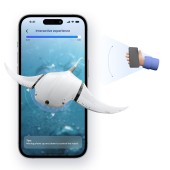
| DESIGN NAME: Pengu Buddy PRIMARY FUNCTION: Animal Health Tracking System INSPIRATION: Zoo animals, including penguins, often experience mood and behavior changes due to environmental and habitual shifts, leading to depression, reduced appetite, and decreased activity. However, the existing technology lacks effective data tracking for individual penguins. The design solution draws inspiration from penguins' natural play behaviors and environmental enrichment strategies. By leveraging interactive robotic technology, we created a system that tracks penguin activity data and fosters engaging interactions between penguins and humans. UNIQUE PROPERTIES / PROJECT DESCRIPTION: PenguBuddy is an interactive health data tracking system combining technology and wildlife care. It features an underwater robot that acts as both a playful toy for penguins and a data collection tool for keepers. The companion mobile app lets visitors control the robot, enjoy immersive interactions, access educational content, and support conservation through donations and gifts. This innovative solution drives positive social impact in wildlife conservation and public engagement. OPERATION / FLOW / INTERACTION: This project connects penguins, visitors, and keepers through an interactive system. Visitors control the robot via the app, creating playful interactions with penguins. The robot collects visual and acoustic data about penguins' activity and sends it to the keeper's dashboard for health monitoring. The app further enriches the visitor experience through educational content and conservation content, facilitating a meaningful connection between human interaction and scientific observation. PROJECT DURATION AND LOCATION: The project started in January 2023 and completed concept phase on February 2024 in Atlanta. FITS BEST INTO CATEGORY: Social Design |
PRODUCTION / REALIZATION TECHNOLOGY: We used Figma and Adobe After Effects to design UI interfaces and also leveraged Rhino to create and render the underwater robot 3D model. Beyond that, we also tested some sensor hardware in the Georgia Institute of Technology ACI Lab. SPECIFICATIONS / TECHNICAL PROPERTIES: The mobile app interface was designed with iOS guidelines. The underwater robot dimensions: Width 640 mm x Depth 120 mm x Height 500 mm TAGS: Animal Computer Interaction, Health Monitoring, Interactive Robot, Penguin Conservation, Education, Visitor Engagement, Mobile App RESEARCH ABSTRACT: This research involved multiple research approaches, including field study, 30 hours of observation, 8 interviews with keepers and visitors, and prototype testing with 12 participants. Observation helped us understand interactions between visitors, keepers, and penguins. Interviews revealed pain points and expectations. We explored existing health tracking technologies and developed core design concepts using environment enrichment, robot interaction, and AI data insights. User feedback from prototype testing guided our design improvements. CHALLENGE: The central design challenge involved harmonizing penguin welfare with captivating visitor interaction, navigating obstacles such as robot durability, online data processing, and ethical animal engagement. Solutions prioritized two key areas: meticulous material testing and ethical design, ensuring robot safety and scientifically informed movement patterns for responsible monitoring. And user-centric interaction design, featuring an intuitive mobile application with gamification and educational content to transform visitors from passive observers to active participants in penguin welfare. The first is the rigorous material testing and ethical design. The underwater robot materials were extensively tested for safety and durability. The movement patterns were carefully designed to mimic animals in the African penguin colony and were informed by research scientists to guarantee ethical monitoring practices. On the other hand, we conducted user-centric interaction design. The mobile application prioritized intuitive controls, catering to a diverse user base. Gamification and educational content were integrated to foster active, empathetic engagement, transitioning visitors from passive observers to active participants in penguin welfare. ADDED DATE: 2024-06-30 05:55:36 TEAM MEMBERS (5) : UX Designer: Yuwei Li, UI Designer: Xinyue Ren, Yuchuan Yu, Industrial Designer: Han Huang, Youyang Hao, and IMAGE CREDITS: Melody Moore Jackson, Georgia Tech ACI Lab |
||||


| CLIENT/STUDIO/BRAND DETAILS | |
 |
NAME: Georgia Aquarium PROFILE: The Georgia Aquarium, a world-renowned institution with thousands of amazing animals, is the perfect place to pilot PenguBuddy. This innovative system aims to improve penguin well-being by providing enrichment activities and fostering positive interactions. |

| AWARD DETAILS | |
 |
Pengu Buddy Animal Health Tracking System by Here Design Studio is Winner in Social Design Category, 2024 - 2025.· Read the interview with designer Here Design Studio for design Pengu Buddy here.· Press Members: Login or Register to request an exclusive interview with Here Design Studio. · Click here to register inorder to view the profile and other works by Here Design Studio. |
| SOCIAL |
| + Add to Likes / Favorites | Send to My Email | Comment | Testimonials | View Press-Release | Press Kit |
Did you like Here Design Studio's Social Design?
You will most likely enjoy other award winning social design as well.
Click here to view more Award Winning Social Design.
  |
 |