Unfinished Journey Residential by Vivian Chiu and Ke Ye Wu |
Home > Winners > #162879 |
 |
|
||||
| DESIGN DETAILS | |||||
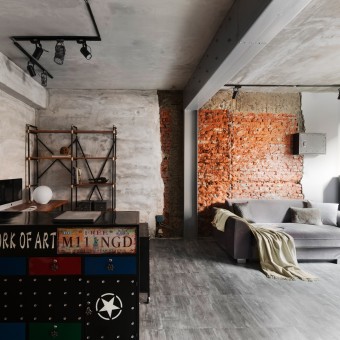
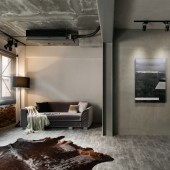
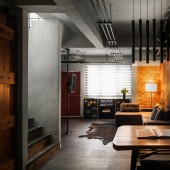
| DESIGN NAME: Unfinished Journey PRIMARY FUNCTION: Residential INSPIRATION: The inspiration came from the house itself, a place that quietly carried over fifty years of family memories. The design was driven by the desire to preserve its unique character and let the traces of time become part of routine, allowing every brick and exposed surface to speak of time and life. By embracing the beauty of raw materials, the project transforms the space into a living story where past and present flow seamlessly together. UNIQUE PROPERTIES / PROJECT DESCRIPTION: This design redefines regeneration by integrating structural reinforcement as an aesthetic language. The exposed steel system strengthens the old framework while becoming a visual anchor. Flexible layouts, adaptive furniture, and breathable material treatments create a living space that evolves with time, balancing durability function and understated industrial beauty rarely seen in typical residential projects. OPERATION / FLOW / INTERACTION: Sunlight filters through large openings casting shadows across textured brick walls, while the subtle scent of aged materials lingers in the air. The open layout invites seamless movement between living and working spaces where footsteps echo gently against the concrete floor. Sliding barn doors open with a soft scrape, revealing hidden corners while steel and wood surfaces offer a tactile connection to the past, grounding every moment in quiet familiarity. PROJECT DURATION AND LOCATION: This project is located in Taoyuan, Taiwan. Design began in December 2023 and was completed in December 2024. FITS BEST INTO CATEGORY: Interior Space and Exhibition Design |
PRODUCTION / REALIZATION TECHNOLOGY: The design was realized through a subtractive approach prioritizing preservation and structural enhancement. Original red bricks were treated with breathable coatings to retain texture while reducing dust. Exposed steel elements were custom fabricated for reinforcement and visual continuity. Lightweight steel frames reduced load on aging structures while allowing spatial openness. The process combined material honesty adaptive reuse and detailed onsite craftsmanship. SPECIFICATIONS / TECHNICAL PROPERTIES: This project is a renovation of a house over 60 years old. The building consists of two floors and a basement, with each floor measuring 105 square meters. The first floor is designed as an open plan living and dining area, along with a kitchen and a bathroom. The second floor includes a bedroom, a bathroom, and a shared living and working zone. TAGS: Adaptive Reuse, Structural Reinforcement, Industrial Aesthetics, Sustainable Renovation, Memory Architecture, Flexible Living Space, Material Authenticity RESEARCH ABSTRACT: The research focused on material behavior and structural adaptation in aging buildings. The aim was to investigate how original elements could be kept while improving durability. Site surveys, structural assessments and material tests conducted, collaborating with engineers, builders and local craftsmen provided data. Results showed that exposed steel systems and breathable coatings balance aesthetics and function offering a replicable model for sustainable renovation. CHALLENGE: The hardest part was preserving the emotional value while ensuring structural safety. Every decision required sensitivity as the house carried decades of family memories. Severe deterioration from humidity posed risks demanding precise reinforcement. The lack of original construction records and adapting modern techniques to unstable foundations pushed the team to constant onsite testing and creative problem-solving. ADDED DATE: 2024-06-28 05:16:53 TEAM MEMBERS (2) : Designer: Vivian Chiu and Designer: Ke Ye Wu IMAGE CREDITS: Image #1: MD Pursuit Image #2: MD Pursuit Image #3: MD Pursuit Image #4: MD Pursuit Image #5: MD Pursuit PATENTS/COPYRIGHTS: Pure Interior Design Limited Company |
||||
| Visit the following page to learn more: https://www.purely2006.com/ | |||||


| CLIENT/STUDIO/BRAND DETAILS | |
 |
NAME: Pure Interior Design Limited Company PROFILE: We keep the design to the purest level, based on humanism, and then feedback to the life of users. Through spatial design, the living space becomes pure and intuitive. The space is designed to be functional and in line with the habits of the residence by incorporating new ideas and aesthetics while preserving the quality of living. To provide residence with a casual, convenient, and fashionable space. |

| AWARD DETAILS | |
 |
Unfinished Journey Residential by Vivian Chiu and Ke Ye Wu is Winner in Interior Space and Exhibition Design Category, 2024 - 2025.· Read the interview with designer Vivian Chiu and Ke Ye Wu for design Unfinished Journey here.· Press Members: Login or Register to request an exclusive interview with Vivian Chiu and Ke Ye Wu. · Click here to register inorder to view the profile and other works by Vivian Chiu and Ke Ye Wu. |
| SOCIAL |
| + Add to Likes / Favorites | Send to My Email | Comment | Testimonials | View Press-Release | Press Kit |
Did you like Vivian Chiu and Ke Ye Wu's Interior Design?
You will most likely enjoy other award winning interior design as well.
Click here to view more Award Winning Interior Design.
  |
 |