Useetogo Metaverse World by Kao Chu Yi |
Home > Winners > #155239 |
 |
|
||||
| DESIGN DETAILS | |||||
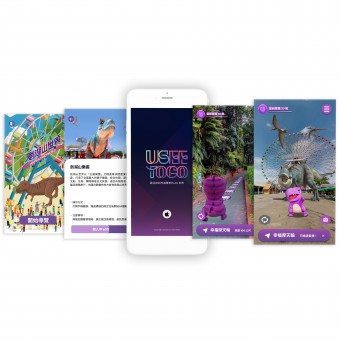
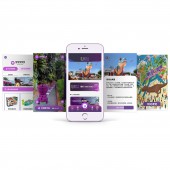
| DESIGN NAME: Useetogo PRIMARY FUNCTION: Metaverse World INSPIRATION: In the past, 2D navigation maps were often used. Furthermore, satellite localization cannot penetrate buildings. Therefore, the navigation cannot be precise. It is not possible for users to accurately and quickly distinguish directions and find destinations. The use of visual positioning service (VPS) can assist platform users in seeing the same path and spatial model as the real field. People’s consumption concepts are changing with the changes in economic forms (from product economy to service economy and then to experience economy). Emphasizing user experience is the most prominent feature of the experience economy. Field operators highly hope that consumers can receive more thoughtful and convenient services in their own fields. They hope to use indoor localization services to allow consumers to enjoy more friendly navigation assistance. UNIQUE PROPERTIES / PROJECT DESCRIPTION: The set point of interest (POI) label can be seen on the screen in any direction through the phone lens. On the relative coordinates of a building or area, clicking on a label will display detailed information. Meanwhile, whether it is a valid label is confirmed. When a valid label is confirmed, the locations of the feature points in the image space where the label is located are transferred to the localization and orientation module. Finally, the algorithm is used to obtain the user’s location and posture relative to the image. OPERATION / FLOW / INTERACTION: SLAM utilizes sensors to construct and update 2D or 3D spatial information of an unknown space. As an AR technology that requires extensive visual data transmission and complex calculations, the speed and breadth of 5G popularization will indirectly assist AR in entering a more efficient application mode. Mobile phones have started to support 5G, enabling faster access to a large amount of visual data and minimizing waiting time. It can create seamless experiences, making the fusion of reality and virtual experience stronger. In the future, it will also be applied in museums, hospitals, and parking lots in addition to shopping center applications. PROJECT DURATION AND LOCATION: The project started in July 2023 in Taiwan and finished in October 2023 in Taiwan. |
PRODUCTION / REALIZATION TECHNOLOGY: The development of the Indoor AR Positioning Mobile Application can be started by providing the environment required for SLAM Indoor AR Positioning development through cloud services, including Cloud Position tools and Mobile Application development environments. Generally, SLAM can recognize the range of around 50 meters. This paper adopted the technology of relative localization, which enabled SLAM to navigate paths over 100 meters with high accuracy. We have verified the use of such localization technology in indoor floor navigation in shopping centers in Taiwan, while for shopping centers or malls, the adjustment and immediate notification of temporary counter positions is one of the key points of retail department store guides. Therefore, we believe that there is a need and necessity for a cloud localization service platform. In addition, field operators can make real-time adjustments in the three-dimensional space of the cloud localization service platform to increase the interactive experience of the field. SPECIFICATIONS / TECHNICAL PROPERTIES: Mobile Application uses visual inertial odometry (VIO) technology to create simultaneous localization and mapping (SLAM). Track and create a correspondence between real and virtual spaces, recognize prominent features in the scene through images captured by mobile cameras and track the positional differences of features under the device’s lens. As the mobile phone moves, the processor integrates data for multi-layer coordinate localization and compares this information with motion-sensing data. Finally, real-time rendering is performed on the image, providing positions and directions in the real world and combining them with virtual objects. TAGS: Metaverse, Augmented Reality, SLAM, Indoor, Outdoor RESEARCH ABSTRACT: Unfortunately, there is currently no practical application of the simultaneous localization and mapping (SLAM) method in large-scale indoor fields. There are still shortcomings that need to be overcome in SLAM technology. For example, how to import and integrate massive environmental data through the cloud? They will address this issue through the SLAM Augmented Reality Indoor Navigation Using Cloud Positioning Platform, which will be the first SLAM Indicator Navigation research in Taiwan. CHALLENGE: This project used point cloud scanning to quickly and accurately draw a 3D spatial map of the field. A point cloud is a collection of extensive point data. Therefore, when the perspective is too close, there will be penetration and divergence phenomena. The point cloud can accurately store the actual size and image spatial information of irregular surface changes of the target object. 3D scanning enables establishing a point cloud of the geometric surface of an object. These point clouds are used to represent the surface shape of objects. A higher resolution (high-density) point cloud can establish a more accurate model. In combination with lens scanning, the surface color of an object can be obtained. Simultaneously, materials can be further pasted onto the surface of the point cloud reconstruction model. Thus, the point cloud model becomes more realistic. 3D scanning measures the distance from an object to the center origin of the scanner (0,0,0). Point cloud data is a collection of a large number of X, Y, Z, R, G, and B coordinates. Convert the point cloud into a mesh and save it as a point cloud file in the polygon file format (PLY). ADDED DATE: 2023-10-08 22:46:04 TEAM MEMBERS (1) : IMAGE CREDITS: Useetogo PATENTS/COPYRIGHTS: Patent Pending |
||||
| Visit the following page to learn more: https://useetogo.com/ | |||||

| CLIENT/STUDIO/BRAND DETAILS | |
 |
NAME: USeeToGo PROFILE: USeeToGo is a company which serves augmented reality, industrial design services. It is the creative group which specialized the media based on visual and digitized platform and combined by a group of people with professional skills and capacity. It tries to present the Interactive Technology on particular platform through internet. USeeToGo enjoys the challenge of new technology and creates the bridge of up-to-date visual language between technology and applicability to generate the new interaction between human beings and computers. |

| AWARD DETAILS | |
 |
Useetogo Metaverse World by Kao Chu Yi is Winner in Mobile Technologies, Applications and Software Design Category, 2023 - 2024.· Read the interview with designer Kao Chu Yi for design Useetogo here.· Press Members: Login or Register to request an exclusive interview with Kao Chu Yi. · Click here to register inorder to view the profile and other works by Kao Chu Yi. |
| SOCIAL |
| + Add to Likes / Favorites | Send to My Email | Comment | Testimonials | View Press-Release | Press Kit |
Did you like Kao Chu Yi's Mobile Design?
You will most likely enjoy other award winning mobile design as well.
Click here to view more Award Winning Mobile Design.
  |
 |