| THE AWARD |
| CATEGORIES |
| REGISTRATION |
| SUBMIT YOUR WORK |
| ENTRY INSTRUCTIONS |
| TERMS & CONDITIONS |
| PUBLICATIONS |
| DATES & FEES |
| METHODOLOGY |
| CONTACT |
| WINNERS |
| PRESS ROOM |
| GET INVOLVED |
| DESIGN PRIZE |
| DESIGN STORE |
| THE AWARD | JURY | CATEGORIES | REGISTRATION | PRESS | WINNERS | PUBLICATIONS | ENTRY INSTRUCTIONS |
Interview with Amarist Studio |
Home > Designer Interviews > Amarist Studio |
Editor Frank Scott (FS) from DesignPRWire has interviewed designer Amarist Studio (AS) for A’ Design Award and Competition. You can access the full profile of Amarist Studio by clicking here.
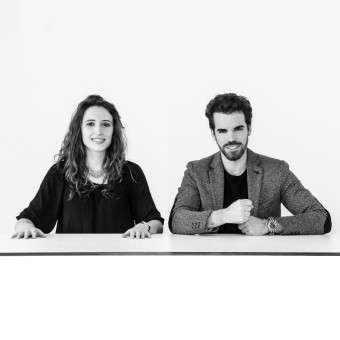
FS: Could you please tell us about your experience as a designer, artist, architect or creator?
AS: I graduated from my Masters in Architecture at 25yo and had the great opportunity to fly to California to design a house for a private client. I spent a year there and I then was hired by an Architecture+Urbanism firm in Zurich, Switzerland, where I worked on a urban planning competition to design a whole new neighborhood in Marseille, and we won! So by 27yo I could say I had designed, along wonderful teams, a house and a neighborhood. It was very fulfilling, but I felt the need to start my own venture and that is how I joined Aran Lozano to build Amarist Studio. Since then it has been a rollercoaster ride, a great journey of learning and growth, a path full of difficulties but also with big achievements.
FS: How did you become a designer?
AS: I never had a clear idea of becoming an architect/designer, I think it was a process of maturation in which I discovered that I liked three fundamentals: art-creativity, functionality-engineering, and business.
FS: What are your priorities, technique and style when designing?
AS: My top priority is making designs that have a soul, that are able to inspire and make people reflect. I don’t stop working on a project until it is an entity as a whole, where nothing can be added or subtracted. The ultimate goal is to make the user/observer fall in love with the piece (concept + aesthetics).I don’t have a specific technique, but more or less I go through the same cycle when designing: 1. Research2. Hand sketches3. Digital modeling4. Physical models5. Repeat/revisit steps 2-3-46. Development in detail7. Fabrication tests8. Final product.
FS: Which emotions do you feel when designing?
AS: At the creative peak of idea generation, it’s kind of weird, I connect with the subconscious of my mind, and time and space disappear for that precious moment. It is a great feeling!During the production process I go through a big spectrum of emotions in which all kinds of feelings and moods circulate at every stage of the process.At the end, when the work is finished, in general I feel great happiness and realization. Sometimes, depending on the work and how long it has taken to design and to build, even my eyes get wet of excitement.
FS: What particular aspects of your background shaped you as a designer?
AS: Love for nature, philosophy and art. Big observer of things and surroundings.Attention to detail, search for (non-existent)perfection.Being organized.
FS: What is your growth path? What are your future plans? What is your dream design project?
AS: Our goal is to expand internationally and start working with top international galleries. Exhibiting in museums and the prominent art and design fairs. We are working on our first public architecture-sculpture design which is a huge milestone for us and we hope to have more opportunities like this one.
FS: What are your advices to designers who are at the beginning of their career?
AS: I think I am still at the beginning of my career … hahahWhat I would recommend to anyone is that if you have an idea, a vision of what you want to do/become, you have to pursue it, communicate it, trace a plan of how to make it happen, and work work, work, persevere, and work more. Make people fall in love with your vision. The journey is difficult and the only way to make progress is being passionate, working hard and efficiently.
FS: You are truly successful as a designer, what do you suggest to fellow designers, artists and architects?
AS: I don’t consider myself as a successful designer just yet, I am young and just getting started.What I would recommend to everyone is to take the time to educate their clients.
FS: What is your day to day look like?
AS: I generally wake up and do a little exercise, meditate and have a big breakfast while reading the news.I usually save the morning for the most creative work and the afternoon for emails and meetings. I finish the day planning what is important to get done on the next day.After work I try to do activities to clear my mind, like sport, going to an art opening or hanging out with friends.
FS: How do you keep up with latest design trends? To what extent do design trends matter?
AS: I keep up with latest design trends through yearly art and design international fairs, exhibitions in galleries, online and printed publications and social media.Trends matter to measure what the market is demanding and what is selling. But rends can be creativity killers, if you want to make a difference you shouldn't base your work on trends.
FS: How do you know if a product or project is well designed? How do you define good design?
AS: A design is good when it has a soul. When the different elements that configure the piece (shape, materiality, usage, light/shadow, rhythm, etc) become a unique entity where nothing can be added or subtracted, with a soul that makes you fall in love with it and touches you something inside you.
FS: How do you decide if your design is ready?
AS: Ha! Good question, in art and design a work is rarely ever complete, you can always change, improve, develop further details, etc. A good rule of thumb is when a piece become a unique entity as a whole, where nothing can be added or subtracted.
FS: What is your biggest design work?
AS: Our biggest design work at Amarist Studio is probably the collaboration with UNHCR – United Nations Refugee Agency - for our first philanthropic design project: the “Welcome” Jewelry Collection. Because its social component is a project of special importance and responsibility for us.In addition, our most important work-in-progress project that we have right now is a sculptural canopy for a public plaza; which is a great challenge and a huge responsibility for us too.
FS: Who is your favourite designer?
AS: I don’t have an exclusive favorite architect/designer. There’s so many good creators in the world and through out history to be able to choose one.As an architect I specially admire Peter Zumthor, his buildings have something truly special; they have the ability to touch your soul.
FS: Would you tell us a bit about your lifestyle and culture?
AS: I live between Barcelona and New York. Each city has a rhythm, a culture, and generates different influences that affect one’s design, as it does the political, economic and social momentum.
FS: Would you tell us more about your work culture and business philosophy?
AS: At Amarist Studio we work as a team, we design together and grow on each other ideas. Our goal – and business - is to create designs that stimulate the thoughts of the viewer, that invites them to experience and reflect on the world around. We try to make the users fall in love with our pieces.
FS: What are your philanthropic contributions to society as a designer, artist and architect?
AS: This last year at Amarist Studio we created our first solidarity project to raise awareness and funds for refugees. Deeply touched by the current Syrian refugee crisis we wanted to get involved. Inspired by the razor wire installed along the southeastern European borders, we designed the “Welcome Jewelry”, a solidarity collection with all proceeds donated to UNHCR – the United Nations Refugee Agency. We want to create a universal symbol with the razor wire spikes, a symbol of respect and support for the war-displaced people around the world.
FS: What positive experiences you had when you attend the A’ Design Award?
AS: Design competitions like the A’ Design Awards are important as a platform for the field, winning an award brings exposure and opens new doors and opportunities.
FS: Thank you for providing us with this opportunity to interview you.
A’ Design Award and Competitions grants rights to press members and bloggers to use parts of this interview. This interview is provided as it is; DesignPRWire and A' Design Award and Competitions cannot be held responsible for the answers given by participating designers.
Press Members: Register and login to request a custom interview with Amarist Studio.
| SOCIAL |
| + Add to Likes / Favorites | Send to My Email | Comment | Testimonials |