Vocabot Language Learning App by Isarakorn Prapatsorn |
Home > |
 |
|
||||
| DESIGN DETAILS | |||||
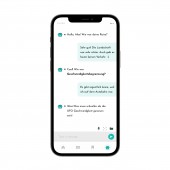
| DESIGN NAME: Vocabot PRIMARY FUNCTION: Language Learning App INSPIRATION: Having been abroad for so many years since a young age, I believe that being able to adapt to the new environment and integrate into the new culture would be very beneficial to the host country and myself. A couple of decades later, with the help of advanced technology like AI in our smartphones, the pain of having to teach oneself the new language can be easily overcome. Not only would this be beneficial to the users, but also the economy of that host country and its society as a whole. UNIQUE PROPERTIES / PROJECT DESCRIPTION: Vocabot is the app that lets you learn a language on the go. Simply look up unfamiliar words with the Smart Translator, save them to review later, or practice with the TandemBot. With technologies like AI, users can have an easier time learning the language of their choice without having to attempt a test. The app simply learns its users' languages abilities while Smart Translator and TandemBot are being used to help users integrate into the host country. OPERATION / FLOW / INTERACTION: Vocabot has been designed for language learners of all ages, backgrounds, and genders. Users can start using the app by learning about the things in their environment by using the smart translator and saving the translations for later use. The TandemBot allows the users to interact using the language they are learning without having to test their own skills. The bot figures out how to get the users started at the level that the users feel comfortable with and help them progress from there. PROJECT DURATION AND LOCATION: The project started in June and finished in August 2020 in Mainz, Germany. |
PRODUCTION / REALIZATION TECHNOLOGY: Vocabot is designed using Figma with the look and feel of iOS platform. The key realisation technology is the use of machine learning in python, which also allows the algorithm for the backend. The frontend can simply be made with react native or flutter. SPECIFICATIONS / TECHNICAL PROPERTIES: This app is designed to fit any modern smartphone running iOS and Android. TAGS: User Experience, User Interface, Artificial Intelligence, eLearning, Linguists, Chatbot, Language Learning RESEARCH ABSTRACT: The design iteration process was implemented for the design of Vocabot. It started with User Research, whereby a series of User Interviews were conducted in order to find out whether the problem and the hypotheses and the solutions make sense. After that, User Personas, Journey Maps, and User Flows were thoroughly analysed before Cardsortings were conducted to ensure the structure of the Sitemap. Then, the prototypes were brainstormed and sketched before series of digital prototypes were made. Finally, the Usability Tests were conducted to make sure the design is going to be truly intuitive from the users perspectives. CHALLENGE: Finding out how to blend the traditional method of learning languages like language course could evolve into the modern way that not only effective and efficient, but also satisfying and safe at the same time was a pile of challenges that needed to be overcome. The issue of trust and data usage was also a problem. The research had to be conducted in order to find out all the details about the negative experience and association the potential users might have in order to define the solution that is trustworthy and fulfil its core objectives at the same time. ADDED DATE: 2021-11-03 14:56:46 TEAM MEMBERS (1) : IMAGE CREDITS: Illustrations from undraw.co |
||||


| CLIENT/STUDIO/BRAND DETAILS | |
 |
NAME: Iceyisaak.com PROFILE: - |

| AWARD DETAILS | |
 |
Vocabot Language Learning App by Isarakorn Prapatsorn is Runner-up for A' Design Award in Mobile Technologies, Applications and Software Design Category, 2021 - 2022.· Read the interview with designer Isarakorn Prapatsorn for design Vocabot here.· Press Members: Login or Register to request an exclusive interview with Isarakorn Prapatsorn. · Click here to register inorder to view the profile and other works by Isarakorn Prapatsorn. |
| SOCIAL |
| + Add to Likes / Favorites | Send to My Email | Comment | Testimonials |
  |
 |