
RElieve Emergency Toilet by Yanzhi Lai |
Home > |
 |
|
||||
| DESIGN DETAILS | |||||
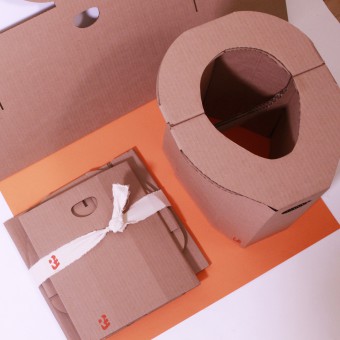
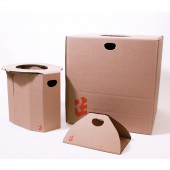
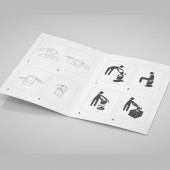
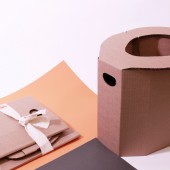
| DESIGN NAME: RElieve PRIMARY FUNCTION: Emergency Toilet INSPIRATION: I believe sanitation is a human right. In a disastrous situation such as an earthquake or landslide, it usually takes 3-4 days before large toilet devices can be transported in. 3 days without proper sanitation can lead to water-borne diseases. Disaster>Lack of sanitation>water- UNIQUE PROPERTIES / PROJECT DESCRIPTION: RElieve, a portable toilet system designed for disaster camps. Made of waxed cardboard, it is lightweight, flat-pack and water-resistant. Supporting the maximum weight of 158 kg, it is used as a low-cost temporary solution in disaster sites before industrial toilets can be transported in. User simply places a plastic bag onto the seat before they use the toilet and can dispose of their waste into the community collection bin. OPERATION / FLOW / INTERACTION: Compared to traditional industrial portable toilet which is large in scale and heavy in weight, RElieve is compact and lightweight. 60 RElieve portable toilets comes in one 50cm x 50cm x 50cm shipping box, and that serves around 300 individuals. RElieve makes it possible for less people to share one toilet in disaster camps. Making the toilet experience more hygienic and private for the users. PROJECT DURATION AND LOCATION: The project started in September 2019 and finished in December 2019 in New York City, and was exhibited at Parsons School of Design in December 2019. FITS BEST INTO CATEGORY: Social Design |
PRODUCTION / REALIZATION TECHNOLOGY: Laser cutting, 100% recyclable waxed water-resistant cardboard. SPECIFICATIONS / TECHNICAL PROPERTIES: Collapsed 330 mm x 330 mm x 20mm, assembled 254 mm x 330 mm x 450mm. TAGS: Toilet, Sanitation, Hygiene, Disaster RESEARCH ABSTRACT: Interviews were conducted to two 2008 Wenchuan Earthquake survivors in order to gather insights. The research was also largely conducted based on research articles done by humanitarian organizations such as World Health Organization and the United Nations, as well as news articles on disaster reliefs. By conducting both primary and secondary researches, I narrowed my design target down to the the 3-4 day gap between disaster happened and large toilet devices are installed in disaster camps. CHALLENGE: 1 - making sure the design is extremely cheap to manufacture and lightweight: I thought of many materials: plastic, silicone... But I ended up deciding to use cardboard for its strength, affordability, recyclability and lightness. 2 - The prototyping process: Finding the right dimensions for the cardboard pattern was extremely challenging. I went through at least 60 cardboard models just to keep refining the dimensions. Eventually the design folds completely flat and support max 158 kg weight. ADDED DATE: 2020-03-31 03:50:24 TEAM MEMBERS (1) : IMAGE CREDITS: All images photographed by Yuhan Liao and Yanzhi Lai, RElieve, 2019. |
||||
| Visit the following page to learn more: http://www.instagram.com/restudionow/ | |||||

| CLIENT/STUDIO/BRAND DETAILS | |
 |
NAME: Parsons School of Design PROFILE: Parsons School of Design, known colloquially as Parsons, is a private art and design college located in the Greenwich Village neighborhood of Lower Manhattan in New York City. It is one of the five colleges of The New School. The school was founded in 1896 by William Merritt Chase in search of individualistic artistic expression. It was the first of its kind in the country to offer programs in fashion design, advertising, interior design, and graphic design. The school offers undergraduate and graduate programs ranging from architectural design, curatorial studies, to textiles and design and urban ecologies. |

| AWARD DETAILS | |
 |
Relieve Emergency Toilet by Yanzhi Lai is Runner-up for A' Design Award in Social Design Category, 2019 - 2020.· Read the interview with designer Yanzhi Lai for design RElieve here.· Press Members: Login or Register to request an exclusive interview with Yanzhi Lai. · Click here to register inorder to view the profile and other works by Yanzhi Lai. |
| SOCIAL |
| + Add to Likes / Favorites | Send to My Email | Comment | Testimonials |
  |
 |