
Hive AI Knowledge Mapping Platform by Hive AI |
Home > Winners > #169652 |
 |
|
||||
| DESIGN DETAILS | |||||
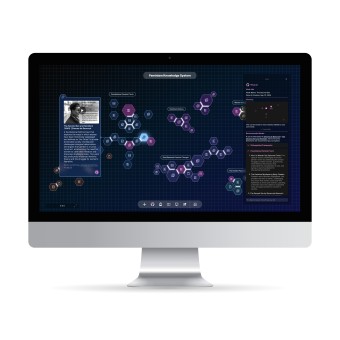
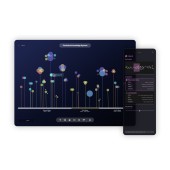
| DESIGN NAME: Hive AI PRIMARY FUNCTION: Knowledge Mapping Platform INSPIRATION: Hive AI epitomizes usability, efficiency, speed, and reliability. Drawing on generative AI and mind-mapping, it transforms learning into a dynamic, personalized journey. Market research shows 78% of users find current tools limiting, revealing a major business opportunity. With elegant simplicity, fluid design, and smart organization, Hive AI redefines learning and unleashes creativity. UNIQUE PROPERTIES / PROJECT DESCRIPTION: Hive AI is a transformative learning platform that enables learners to build personalized knowledge systems. With the unique “hexagon knowledge nodes” and AI-driven tools like tailored recommendations, knowledge grouping, and dynamic data visualization, Hive supports students, professionals, and researchers in fostering interdisciplinary exploration and managing complex information. OPERATION / FLOW / INTERACTION: The system structures fragmented information into interconnected knowledge. Learners upload and organize content - text, videos, and images - and AI enhances connections and identifies gaps. - Node Expansion builds knowledge structures based on interests. - Gap Bridging links concepts for deeper understanding. Structured Organization groups information for easier memorization. - Nonlinear Exploration enables dynamic navigation. Hive AI also provides visual templates, like historical timelines and 3D hexagonal maps, making knowledge presentation more intuitive and effective. PROJECT DURATION AND LOCATION: Research - 1 Month Concept and Prototyping - 2 Months Design Finalization - 1.5 Months Evolutives & APP Development: ongoing FITS BEST INTO CATEGORY: Interface, Interaction and User Experience Design |
PRODUCTION / REALIZATION TECHNOLOGY: Hive AI's technology was developed through an iterative, data-driven approach leveraging advanced neural networks. The product mission guided development, ensuring the machine learning framework effectively organizes users' thoughts into structured knowledge. Rigorous testing and refinement perfected the node-based architecture for seamless non-linear exploration. The final system prioritizes adaptability, efficiency, and reliability, empowering users with a dynamic, personalized learning experience. SPECIFICATIONS / TECHNICAL PROPERTIES: Designed for adaptability, efficiency, and reliability, the platform features a responsive interface optimized for various screen sizes, supporting landscape and portrait modes. Users can personalize their experience with light and dark themes, while cross-device compatibility ensures accessibility. AI-driven adaptability enhances learning preferences, providing real-time interactions with secure performance. Hive AI integrates technical precision with user-friendly design, delivering a dynamic, intuitive experience tailored to individual needs. TAGS: Geneartive AI, Adaptive Learning, Personalization, Ed-Tech, Non-linear Interaction, Data Visualization RESEARCH ABSTRACT: Type: Competitive & User-Centered Design Research Objective: Enhance exploratory, autonomous learning with AI-powered tools. Methodology: Surveys, interviews, and usability testing. Tools: Google Forms, SurveyMonkey, Zoom, Figma prototypes. Participants: 100 technology enthusiasts Results: Optimized node connection interactions. Improved accessibility with refined UI. Prioritized key data visualization methods. Insights & Impact: AI-driven design enhances learning efficiency, accessibility, and critical thinking, fostering a more engaging and effective digital education experience. CHALLENGE: How can node-based interactions feel as intuitive as conversation-based AI? This challenge explores motion design, iconography, and cognitive flow for seamless user adaptation. By researching existing node-based systems, the effectiveness in guiding eye movement and mental mapping was evaluated, identifying both strengths and gaps. Through user testing, motion and icons for clarity and usability were refined. The goal is to create a visually intuitive, AI-assisted system that preserves familiar interaction patterns while enhancing how users navigate complex knowledge structures with ease and engagement. ADDED DATE: 2025-02-24 21:49:56 TEAM MEMBERS (5) : Yongwen Dai, Xuefei Wang, Keqing (Clara) Jiao, Hanyong Yang and Huiyang Chen IMAGE CREDITS: Yongwen Dai, Xuefei Wang, Keqing (Clara) Jiao, Hanyong Yang, Huiyang Chen PATENTS/COPYRIGHTS: Yongwen Dai, Xuefei Wang, Keqing (Clara) Jiao, Hanyong Yang, Huiyang Chen |
||||


| CLIENT/STUDIO/BRAND DETAILS | |
 |
NAME: Hive AI PROFILE: Hive AI is a technology company specializing in AI-driven interactive knowledge systems. The company focuses on enhancing knowledge organization, learning, and creativity through generative AI and mind-mapping technologies. Designed for students, professionals, and researchers, Hive AI structures fragmented information into interconnected knowledge, enabling efficient exploration and retention. Hive AI’s core technology is based on a unique hexagon knowledge node system, supported by AI-powered tools such as tailored recommendations, structured organization, and dynamic data visualization. These features facilitate nonlinear knowledge navigation, allowing users to discover and bridge conceptual gaps. The platform also integrates interactive templates, such as historical timelines and 3D hexagonal maps, optimizing knowledge presentation and cognitive retention. The company applies user-centered research methodologies, including surveys, interviews, and usability testing, to refine its AI-assisted knowledge mapping system. With an iterative, data-driven development process, Hive AI ensures usability, efficiency, and adaptability. Hive AI addresses the growing demand for adaptive learning solutions, particularly in education, research, and professional development. By leveraging AI to enhance information structuring and accessibility, the platform supports a more effective and engaging approach to digital learning and knowledge management. |

| AWARD DETAILS | |
 |
Hive Ai Knowledge Mapping Platform by Hive Ai is Winner in Interface, Interaction and User Experience Design Category, 2024 - 2025.· Read the interview with designer Hive AI for design Hive AI here.· Press Members: Login or Register to request an exclusive interview with Hive AI. · Click here to register inorder to view the profile and other works by Hive AI. |
| SOCIAL |
| + Add to Likes / Favorites | Send to My Email | Comment | Testimonials | View Press-Release | Press Kit |
Did you like Hive Ai's Interface Design?
You will most likely enjoy other award winning interface design as well.
Click here to view more Award Winning Interface Design.
  |
 |