De Muros a Marcas Street Art Cathedra and Art Book by Paul Joshua Martinez Calderon |
Home > Winners > #167455 |
 |
|
||||
| DESIGN DETAILS | |||||
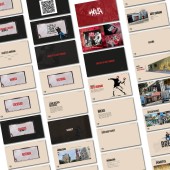
| DESIGN NAME: De Muros a Marcas PRIMARY FUNCTION: Street Art Cathedra and Art Book INSPIRATION: Growing up in Huancayo, Peru, I initially saw graffiti as vandalism. However, exposure to street art in cities like Lima’s Callao and Barranco changed my perspective. I began experimenting with graffiti at age eleven, which sparked my interest in design. Influenced by American and European street art, I pursued graphic design in university. This led me to create an Art Book, demystifying graffiti's connection to design and it evolved into a successful elective course for my career. UNIQUE PROPERTIES / PROJECT DESCRIPTION: This project aims to educate university students in art and design about street art’s impact on contemporary design. Through the design of an elective course and accompanying artbook, a syllabus was developed and subsequently approved by design professionals. The elective course explores street art’s aesthetic and its potential to address social issues. The syllabus and the artbook includes practical projects, historical and contemporary insights. OPERATION / FLOW / INTERACTION: The book is designed to support students through various course sessions, acting as a guide that reinforces the instruction provided by the teacher. The slides are presented during class and are available to students at all times on the course's virtual classroom platform. Templates have been created to assist students in the initial steps of each learning session, featuring activities to be completed both in class and at home. All elements work together seamlessly to help students grasp fundamental concepts, promoting effective learning in design and street art. PROJECT DURATION AND LOCATION: The project is designed to last for one regular "Universidad San Ignacio de Loyola" semester, approximately three months. The course is divided into 15 classes, one per week, covering all the content of the course syllabus, including practical exercises and the final project. |
PRODUCTION / REALIZATION TECHNOLOGY: The project was developed using a variety of design and illustration techniques. It includes hand-drawn illustrations created with alcohol-based markers and acrylic paints, as well as digital illustrations using Procreate and Adobe software. SPECIFICATIONS / TECHNICAL PROPERTIES: The art book measures 32 cm in width and 28 cm in length, with various finishes that enhance durability and the quality of the illustrations. The slides and course syllabus are formatted according to the university's standards. The guides and sheets are designed in A4 size to ensure students can easily print them using a standard printer. TAGS: Street Art, Art Book, Design Course, Cathedra, Illustration, Editorial Design, Book Design, Graffiti, University Class RESEARCH ABSTRACT: For the development of the project, research was conducted through art books, drawing guides, and various studies and articles about how design and urban art can communicate social or business messages. Additionally, surveys and interviews were carried out with design professionals and students to validate the type of content that should be included for it to be both educational and engaging. Based on the research findings, a model class was created to assess the effectiveness and reception among teachers and university students, identifying strengths and areas for improvement. CHALLENGE: The main challenge of this project was demonstrating that street art holds valuable graphic material suitable for study in creative fields, aiming to use it as an effective communication tool for relevant projects. The difficulty lay in convincing professionals that urban art is more than vandalism or visual pollution. The course had to be engaging, with innovative content that students would appreciate and revisit. Graphic materials had to be effective, with a strong visual identity that showcased both design professionalism and street art creativity. ADDED DATE: 2025-01-22 13:32:18 TEAM MEMBERS (1) : IMAGE CREDITS: Paul Joshua Martinez Calderon, 2024. |
||||
| Visit the following page to learn more: https://repositorio.usil.edu.pe/entities |
|||||





| AWARD DETAILS | |
 |
De Muros a Marcas Street Art Cathedra and Art Book by Paul Joshua Martinez Calderon is Winner in Education, Teaching Aid and Training Content Design Category, 2024 - 2025.· Read the interview with designer Paul Joshua Martinez Calderon for design De Muros a Marcas here.· Press Members: Login or Register to request an exclusive interview with Paul Joshua Martinez Calderon. · Click here to register inorder to view the profile and other works by Paul Joshua Martinez Calderon. |
| SOCIAL |
| + Add to Likes / Favorites | Send to My Email | Comment | Testimonials | View Press-Release | Press Kit |
Did you like Paul Joshua Martinez Calderon's Education Design?
You will most likely enjoy other award winning education design as well.
Click here to view more Award Winning Education Design.
  |
 |